You are one video call away from the career of your dreams, and most candidates blow it within the first 90 seconds.
That is the uncomfortable truth nobody tells you when you finally land a remote job interview. The hiring landscape has shifted entirely. Companies are now recruiting talent across continents, time zones are no longer barriers, and your living room has quietly become your stage. The question is no longer whether you are qualified. The real question is whether you are prepared for a format that rewards a completely different skill set.
Candidates who thrive in remote interviews are not always the most experienced. They are the most intentional. They walked into their video call with a strategy, a setup, and a presence that made the hiring panel feel certain they had found exactly the right person.
Whether you are a seasoned professional transitioning to remote work or a newcomer to virtual hiring, these five powerful tips will hand you a decisive edge over every other candidate in the digital room.
Tip 1: Transform Your Space Into a Professional Studio
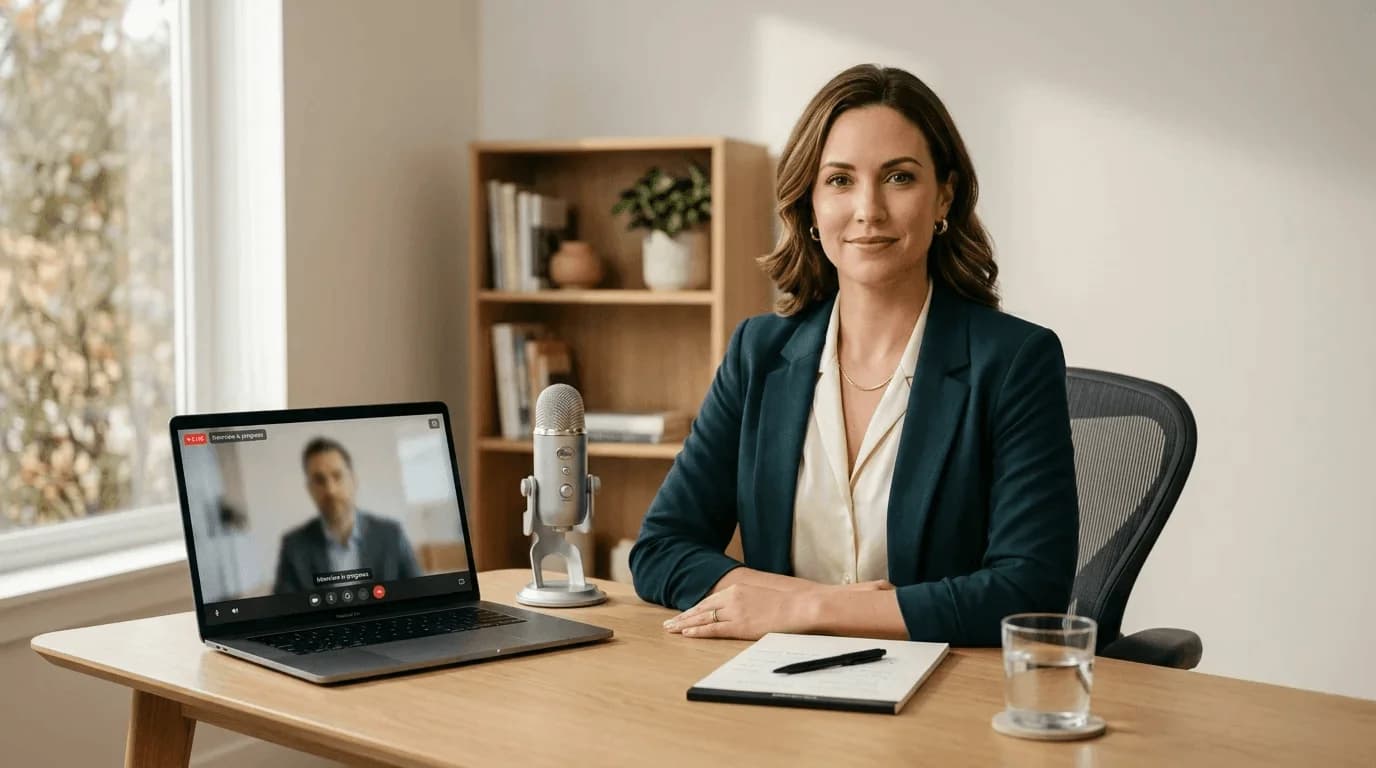
Before you say a single word in your remote interview, your environment is already speaking for you. Hiring managers form powerful impressions within milliseconds, and a cluttered background, poor lighting, or echoing audio can silently eliminate you before your first answer even lands.
Choose a dedicated interview zone: Select a quiet area in your home with a clean, neutral background. Avoid windows directly behind you as they create glare and wash out your face. Position yourself so light falls onto your face from the front, not from behind. Natural light is ideal, but a simple desk lamp placed in front of you works just as effectively.
Eliminate every possible distraction without exception: Silence your phone completely. Lock the door to the room. Notify anyone in your household that you are fully unavailable for the duration of the call. One unexpected interruption can fracture the professional image you have worked to build.
Prioritize your audio quality above everything else: Research shows that poor audio causes more interview failures than poor video. Muffled or choppy sound forces your interviewer to strain, and that frustration lands directly on your candidacy. A basic USB microphone or quality earbuds with a built in microphone are affordable investments that pay significant dividends.
Pro Tip: Conduct a full dress rehearsal in your exact interview setup 24 hours before the actual call. Record yourself answering a practice question and review it critically. You will catch issues you never noticed during live preparation sessions.
Tip 2: Dominate Your Technology Before Interview Day
Nothing derails a promising interview faster than technical chaos. A frozen screen, a dropped connection, or a platform you have never navigated before are not minor inconveniences. They are confidence killers that signal to the employer that you may not be equipped to thrive in a remote environment.
Familiarize yourself completely with the interview platform: Whether it is Zoom, Microsoft Teams, Google Meet, or another tool entirely, spend at least 30 minutes exploring every feature before your interview day. Know how to mute yourself, how to share your screen if needed, and how to adjust your video and audio settings confidently.
Run a thorough technical test at least 24 hours in advance: Check your internet connection speed. If your home network is unreliable, connect directly to your router with an ethernet cable for a stable and uninterrupted signal. Keep a fully charged backup device within reach as a contingency plan.
Prepare a backup plan and communicate it proactively: Before your interview, send a brief note to your interviewer acknowledging that technology can occasionally be unpredictable and sharing an alternative contact number. This single gesture signals professionalism, foresight, and genuine respect for their time.
Close every application and browser tab you do not need: Your computer should be running only what the interview demands. Background processes consume bandwidth and processing power, and they can cause your video to buffer at the single worst possible moment.
Tip 3: Master the Art of On-Camera Presence
Looking confident and natural on camera is a genuine skill that most people never intentionally develop. Remote interviews introduce layers of complexity that face to face settings simply do not carry, and mastering your on-camera presence will instantly separate you from the average candidate.
Look directly into the camera lens, not at the screen: This is the single biggest mistake remote interviewees make repeatedly. When you look at the faces on your screen, your eyes are visibly cast downward and you appear to be avoiding eye contact. Train yourself to look into the lens during key moments, especially when making important points or listening with intention.
Dress professionally from head to toe without compromise: Yes, even the parts the camera cannot see. Research consistently shows that when you dress fully for a role, your mindset elevates into professional mode. Your confidence, posture, and energy all improve when you feel appropriately presented.
Control your speaking pace and volume with intention: Internet connections can create subtle audio delays. Speak slightly slower than your natural conversational pace, pause deliberately between points, and articulate each word with clarity. This is not about sounding robotic. It is about being thoroughly understood on the other side of the screen.
Use deliberate and composed body language throughout: Sit upright with your shoulders back. Position yourself so your head and upper body are comfortably within the camera frame. Use subtle hand gestures to emphasize key points. Facial expressions and attentive nodding communicate enthusiasm and engagement even through a small screen.
Tip 4: Research the Company With Surgical Precision
Every candidate says they researched the company before applying. Very few actually do it at a level that genuinely impresses interviewers. Remote roles are fiercely competitive, attracting qualified applicants from every corner of the globe. The depth of your research will either set you distinctly apart or blend you invisibly into the crowd.
Go far beyond the company homepage: Read recent press releases, industry news articles, and the company's active social media pages. Understand their current challenges, recent achievements, and long-term strategic direction. Employers are captivated by candidates who demonstrate awareness of the broader picture and not just the job description.
Study the specific role with forensic level of detail: Break down every line of the job posting. Identify the top three skills and experiences they are clearly prioritizing, then prepare specific, memorable stories that demonstrate each of those qualities. Structure your answers using the STAR method: Situation, Task, Action, and Result.
Research the interviewer personally and thoughtfully: If you know who will be speaking with you, study their professional background, areas of expertise, and public content. Understanding their perspective allows you to frame your answers in language that resonates specifically with them on a deeper level.
Prepare questions that reveal strategic thinking: Never ask questions whose answers are readily available on the company website. Instead, inquire about current team challenges, how success is measured in the specific role, and the culture of remote collaboration within the organization. These questions signal that you are already thinking like someone who belongs inside the company.
Tip 5: Engineer a Powerful Post-Interview Follow-Up
The interview does not end the moment you close the video call. What you do in the 24 hours immediately following your remote interview can meaningfully influence the final hiring decision, and the vast majority of candidates completely neglect this golden window of opportunity.
Send a personalized thank you email within two hours of the call: This is not optional and it is not a formality. A thoughtfully written thank you note that references specific moments from your conversation demonstrates genuine attentiveness and authentic enthusiasm for the role. Keep it concise, warm, and professionally polished.
Reinforce your value strategically within the follow-up message: Use this email as an opportunity to briefly revisit your strongest qualification or to address any concern that surfaced during the interview. This is your final opportunity to shape the narrative before the decision is made.
Follow up respectfully if you do not receive a response: If the employer shared a decision timeline and that date passes without communication, send a polite and professional follow-up email reaffirming your continued interest in the role. Persistence paired with grace is universally respected in professional environments.
Reflect on your performance and document it immediately: Write down every question you were asked while your memory is fully fresh. Evaluate your answers with honest self-assessment. Identify what landed powerfully and what needed greater clarity or structure. Every remote interview, regardless of the outcome, is invaluable data that sharpens your performance for the next opportunity.
You Are More Ready Than You Think
Remote interviews are not the obstacle they appear to be at first glance. They are actually a remarkable equalizer. You control your environment, your setup, your preparation, and your energy in ways that face to face interviews simply do not permit.
The candidates who consistently win remote roles are not always the most credentialed. They are the most prepared. They showed up to their video call with conviction because they had done the deliberate work that every other candidate skipped.
Now you have the complete blueprint in your hands. The only remaining step is to use it.
Your next remote job interview is not just a conversation. It is a performance with career-defining stakes.
Make it one they remember.