
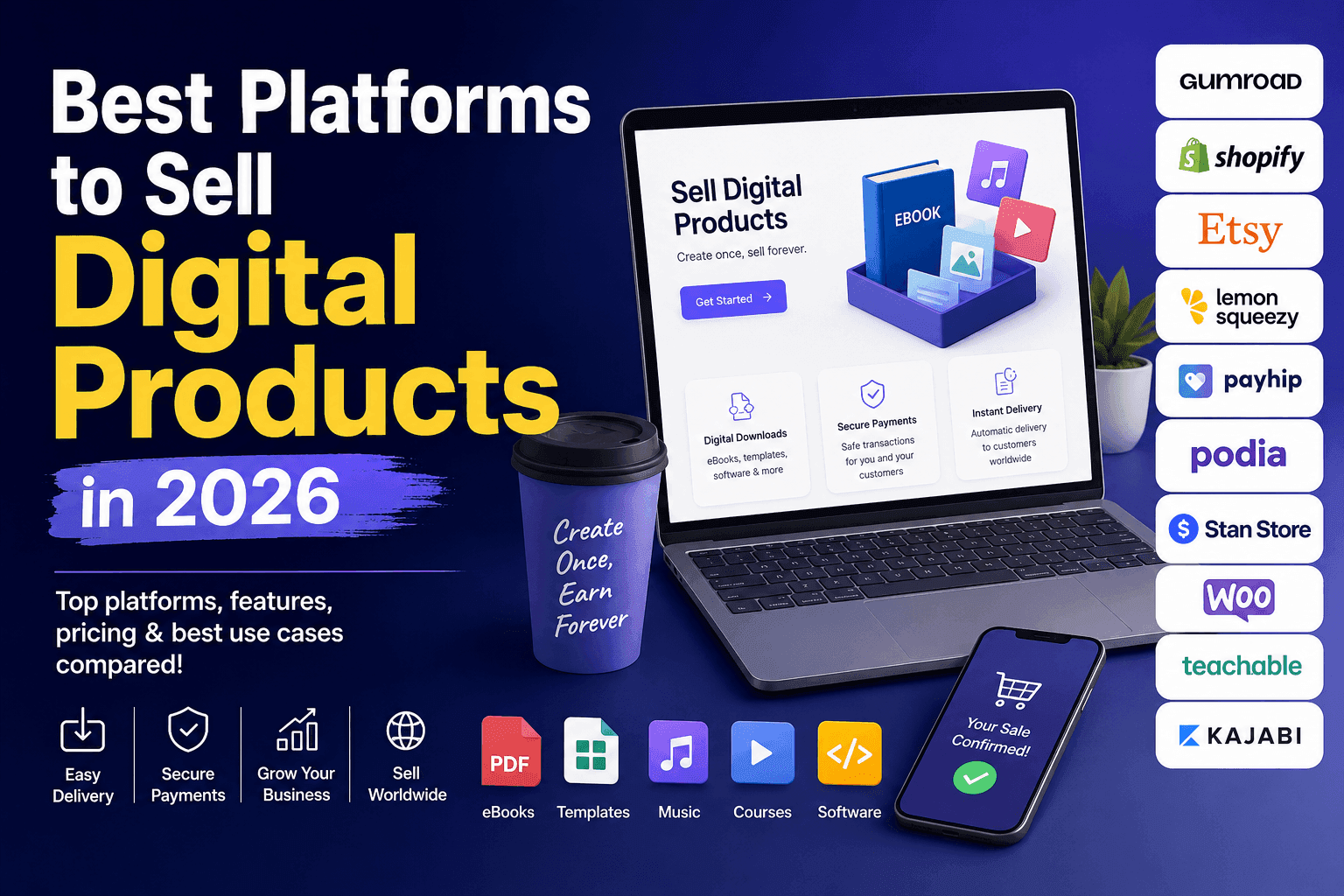
If you want to build a real online income in 2026, selling digital products is one of the fastest and most scalable ways to do it. Whether you sell eBooks, online courses, templates, design assets, or software, choosing the right platform can make or break your success.
In this guide, you’ll discover the best platforms to sell digital products in 2026, their features, pricing, and who they are best suited for.
What Are Digital Product Platforms?
Digital product platforms are online tools that allow creators, developers, and entrepreneurs to sell downloadable or access-based products such as:
eBooks
Online courses
Design templates
Music and audio files
Software and SaaS tools
Membership content
Instead of building everything from scratch, these platforms handle payments, delivery, and sometimes even marketing.
1. Gumroad – Best for Beginners and Simple Selling
Gumroad is one of the most popular platforms for selling digital products with zero complexity.
Why Gumroad stands out:
Very easy to set up
No monthly fee (pay per sale)
Supports eBooks, music, videos, software, and memberships
Built-in email marketing tools
Best for:
Beginners, indie creators, writers, designers, and developers
Drawback:
High transaction fees compared to advanced platforms
2. Shopify – Best for Building a Full Online Business
Shopify is a powerful eCommerce platform that supports both physical and digital products.
Why Shopify is powerful:
Fully customizable online store
Huge app ecosystem
Supports digital downloads via apps
Advanced marketing and SEO tools
Best for:
Serious entrepreneurs building long-term digital brands
Drawback:
Monthly subscription cost
3. Etsy – Best for Creative Digital Products
Etsy is a marketplace known for handmade and creative goods, including digital downloads.
Why Etsy works:
Built-in traffic from millions of buyers
Great for templates, planners, and printables
Easy listing system
Best for:
Designers, artists, and printable creators
Drawback:
High competition and listing fees
4. Lemon Squeezy – Best for SaaS & Software Creators
Lemon Squeezy is built specifically for digital products, SaaS, and software businesses.
Key features:
Handles global taxes (VAT, GST)
Subscription billing support
Checkout optimization for conversions
Fraud protection included
Best for:
Developers, SaaS founders, and software sellers
Drawback:
Less known than mainstream platforms
5. Payhip – Best Budget-Friendly Option
Payhip allows creators to sell digital downloads, courses, and memberships easily.
Why Payhip is useful:
Free plan available
Built-in affiliate marketing
Simple checkout system
Instant file delivery
Best for:
Small creators and side hustlers
Drawback:
Limited advanced customization
6. Podia – Best All-in-One Creator Platform
Podia is an all-in-one platform for selling courses, downloads, and memberships.
Features:
Website builder included
Email marketing tools
Course hosting
No transaction fees on paid plans
Best for:
Coaches, educators, and digital entrepreneurs
Drawback:
Less flexibility than Shopify
7. Stan Store – Best for Social Media Creators
Stan Store is designed for creators who sell directly from social platforms like TikTok and Instagram.
Why creators love it:
Mobile-first design
Perfect for influencer monetization
Simple product setup
Built-in checkout links for bios
Best for:
Content creators and influencers
Drawback:
Not ideal for large-scale stores
8. WooCommerce – Best for WordPress Users
WooCommerce is a plugin that turns any WordPress site into a full eCommerce store.
Key benefits:
Fully customizable
Open-source
Huge plugin ecosystem
No platform lock-in
Best for:
Developers and WordPress users
Drawback:
Requires technical setup
9. Teachable – Best for Online Courses
Teachable is a leading platform for selling online courses.
Features:
Course builder with video hosting
Student management system
Payment processing included
Quizzes and certificates
Best for:
Educators and course creators
Drawback:
Limited flexibility outside courses
10. Kajabi – Best Premium All-in-One Platform
Kajabi is a premium platform for serious digital entrepreneurs.
Why Kajabi is powerful:
Website + funnel builder
Email marketing automation
Course and membership hosting
Advanced analytics
Best for:
High-income digital businesses and coaches
Drawback:
Expensive monthly pricing
Comparison Table
Platform | Best For | Pricing Style |
|---|---|---|
Gumroad | Beginners | Pay per sale |
Shopify | Full businesses | Monthly |
Etsy | Creatives | Listing fees |
Lemon Squeezy | SaaS & software | Transaction-based |
Payhip | Side hustlers | Free + paid |
Podia | All-in-one creators | Monthly |
Stan Store | Social media creators | Monthly |
WooCommerce | WordPress users | Free + hosting |
Teachable | Course creators | Monthly |
Kajabi | Premium entrepreneurs | High monthly |
Final Thoughts
The best platform depends on your goals:
Want simplicity? → Gumroad or Payhip
Want full business control? → Shopify or WooCommerce
Selling courses? → Teachable or Kajabi
Social media creator? → Stan Store
SaaS or software? → Lemon Squeezy
In 2026, the real winners won’t just be creators with good products—they’ll be creators who choose the right platform to scale faster.
Frequently Asked Questions (FAQ)
1. What is the best platform to sell digital products in 2026?
It depends on your use case, but Shopify, Gumroad, and Lemon Squeezy are top choices overall.
2. Can I sell digital products for free?
Yes, platforms like Gumroad and Payhip allow you to start for free.
3. What digital products sell best?
eBooks, templates, online courses, software tools, and design assets perform very well.
4. Do I need a website to sell digital products?
No. Platforms like Gumroad, Etsy, and Stan Store allow you to sell without a website.