
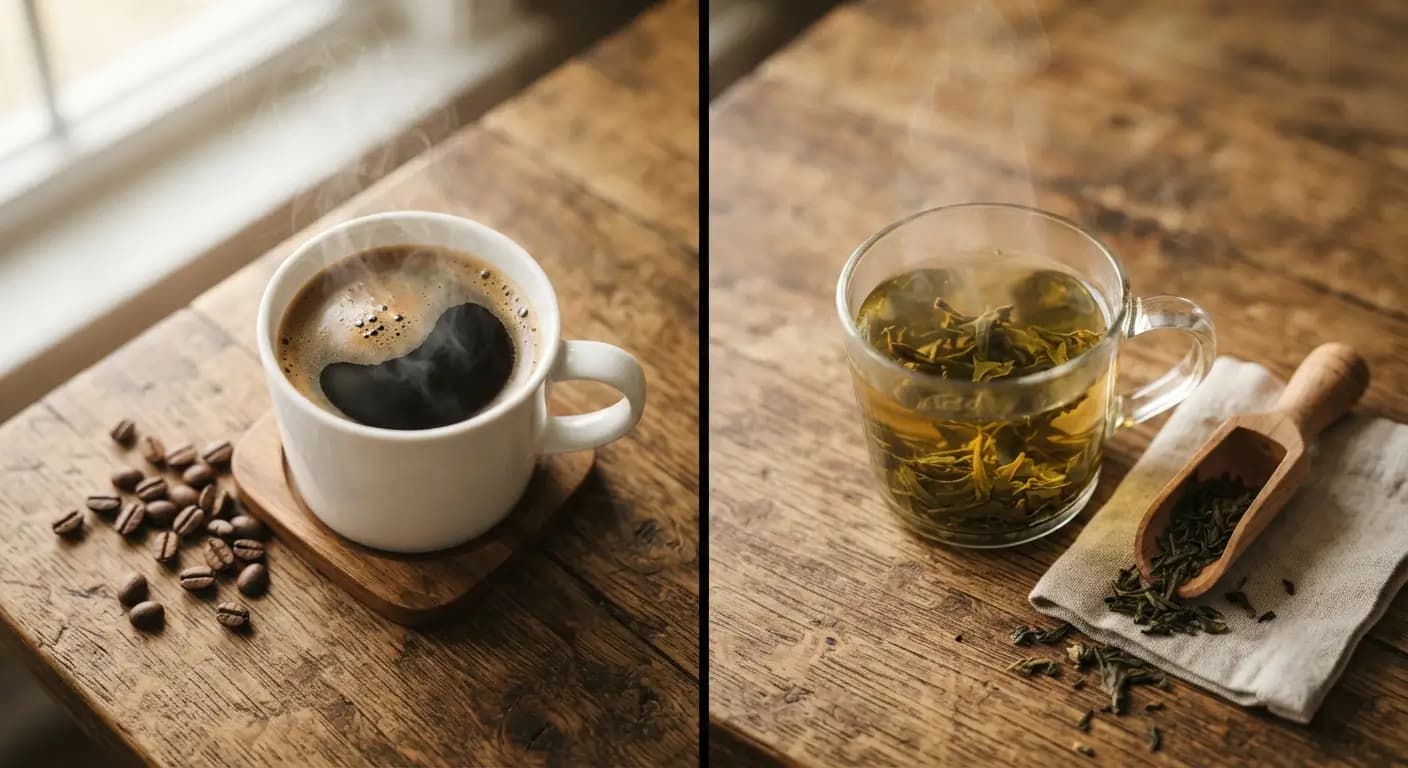
Walk into any kitchen in the morning and you will find one of two rituals playing out: the hiss of an espresso machine or the quiet steep of a teabag in hot water. Billions of people start their day this way, and for just as long, a friendly argument has followed them: which one is actually better for you?
The honest answer is that both drinks earn their reputation as health boosters, just through slightly different mechanisms. Coffee and tea share a long list of protective compounds, but they diverge in ways that matter depending on your goals, your sensitivity to caffeine, and even your dental habits. Here is a full breakdown of what the science says, without picking a winner too early.
How Much Caffeine Is Actually in Your Cup
The caffeine comparison is where most people start, and the numbers surprise a lot of coffee drinkers. An average 8 ounce cup of brewed coffee delivers somewhere between 95 and 200 milligrams of caffeine, depending on the bean, the roast, and how it is brewed. Espresso concentrates that dose into a smaller serving, while cold brew and takeaway coffee shop drinks often land on the higher end of the range.
Tea, by contrast, tends to fall much lower. Black tea generally contains 40 to 70 milligrams per cup, green tea sits around 20 to 45 milligrams, and white tea is often the gentlest of the true teas at 15 to 30 milligrams. Matcha is the outlier among teas because you consume the whole ground leaf rather than steeping and discarding it, so a serving can approach 60 to 70 milligrams, closer to a light coffee. Herbal teas, which technically are not made from the tea plant at all, contain no caffeine.
Interestingly, dry tea leaves actually contain more caffeine by weight than raw coffee beans. The reason your cup ends up gentler comes down to brewing. Tea uses a small amount of leaf steeped briefly in water that is often cooler than a drip coffee maker's near boiling temperature, while coffee uses a larger quantity of grounds in direct, prolonged contact with hot water. That difference in extraction, not the raw plant material, is what gives coffee its stronger kick per cup.
For most healthy adults, the commonly cited safe ceiling is around 400 milligrams of caffeine a day, roughly three to five cups of coffee or considerably more cups of tea. People who are pregnant, breastfeeding, prone to migraines, or living with certain heart conditions are usually advised to stay under 200 milligrams daily and should check with a doctor about their specific limit.
Why the Same Stimulant Can Feel So Different
If caffeine were the whole story, coffee would simply be the stronger version of tea. But many people report a smoother, steadier lift from tea and a sharper, sometimes jittery spike from coffee, even when the milligram counts are not wildly different. The explanation lies in a compound called L-theanine, an amino acid found almost exclusively in tea leaves.
L-theanine appears to slow the absorption of caffeine and promotes alpha brain wave activity, the same pattern associated with relaxed, focused alertness rather than a jolt of stimulation. This is why tea drinkers often describe a calmer form of energy, while a strong espresso can produce a faster and more intense, but shorter lived, sense of alertness. If you are sensitive to caffeine crashes or anxiety, this difference in how the stimulant behaves in your body may matter more than the total dose.
Antioxidants and Polyphenols: Coffee's Surprising Edge
Both beverages are genuinely rich sources of antioxidants, plant compounds called polyphenols that help neutralize free radicals and may reduce the risk of several chronic diseases. This is one area where coffee often outperforms expectations. Some analyses put coffee's antioxidant content at roughly 1.7 to 2.5 times higher than tea's, with filtered or boiled coffee delivering around 200 to 550 milligrams of antioxidants per cup compared with roughly 150 to 400 milligrams in a cup of tea.
Chlorogenic acid, present in both coffee and black tea, is one of the standout compounds. It appears to help regulate blood sugar and improve how the body metabolizes fat, partly by enhancing insulin sensitivity so cells can use glucose more efficiently. Green and black tea bring their own signature polyphenols to the table, particularly catechins like EGCG in green tea, which have been studied for their potential role in reducing inflammation and supporting heart health. Coffee simply tends to edge tea out on raw antioxidant concentration per serving, even though tea's specific compounds have their own well documented benefits.
What the Long Term Studies Actually Show
Population studies on coffee and tea drinkers consistently point in a favorable direction, though it is worth remembering these are observational studies that show association rather than direct cause and effect.
One large study following coffee drinkers found that those who drank between 2.5 and 4.5 cups a day had roughly a 30 percent lower likelihood of dying during the study period compared with non drinkers, and the benefit held even for people who added a little sugar. Coffee consumption has also been linked to a lower risk of type 2 diabetes, with one analysis of multiple studies covering nearly 200,000 people finding that regular coffee drinking significantly reduced diabetes risk, likely tied to improved insulin sensitivity.
Tea research tells a similar story from a different angle. A large observational study following tea drinkers found associations with reduced inflammation and stress related biomarkers, credited to tea's rich polyphenol content. Separately, a major study published in 2024 found that people who consumed 200 to 300 milligrams of caffeine a day from either coffee or tea had a lower risk of diabetes, coronary artery disease, and stroke, suggesting the benefit is not exclusive to one beverage.
Regular coffee drinking has also been associated with a lower risk of fatty liver disease, depression, and cognitive decline in several long running studies, along with a modest amount of dietary fiber that most people do not expect from a beverage. Tea's more limited catalog of large scale studies is partly a reflection of how many varieties exist, from green to black to oolong to white, each with a slightly different chemical profile that researchers have to study separately.
The Trade Offs Worth Knowing About
Neither drink is without downsides, and the trade offs are worth weighing honestly.
Both coffee and tea can interfere with iron absorption from food, an effect linked to their polyphenol content rather than caffeine alone. Studies have found that a cup of coffee taken with a meal can reduce iron absorption by around 39 percent, while tea's effect can be even larger, reducing absorption by up to 64 percent in some research. This matters most for people already at risk of iron deficiency, including women of reproductive age and vegetarians, who are generally advised to drink coffee or tea between meals rather than alongside them.
Dental health is another consideration. Both beverages contain tannins that bind to enamel and cause staining over time, and black tea is frequently cited by dentists as an even more persistent stainer than coffee. Coffee's higher acidity, with a pH often between 4.85 and 5.10, makes it more likely to gradually soften enamel with heavy daily use, while most teas sit in a gentler 5.5 to 6.5 range. Rinsing with water after a cup and giving your enamel time to remineralize before brushing can help limit the damage from either drink.
Digestive comfort is more individual. Coffee's acidity can trigger heartburn or stomach discomfort in sensitive people, and both drinks can worsen symptoms for anyone already dealing with indigestion or acid reflux.
So Which One Is Actually Healthier?
Based on the full picture, there is no clear universal winner, and most nutrition experts land on the same conclusion: both are healthy choices for the average adult, and the better option depends on what you are optimizing for.
If raw antioxidant density and a stronger, faster energy lift matter most to you, coffee has the edge. If you want a gentler, steadier form of alertness with less risk of jitters, a lower caffeine load, and less interference with iron absorption, tea is the better fit. If you already have a sensitive stomach or are watching your blood pressure, tea's lower dose per cup may be more comfortable, though decaffeinated versions of either drink are reasonable alternatives if you want to avoid caffeine altogether.
How to Choose Based on Your Goals
A few practical starting points can help you decide day to day rather than picking a single beverage forever.
For a strong morning boost before a demanding task, a filtered coffee or espresso delivers the fastest and most concentrated lift. For sustained, calmer focus through a long work session, green or black tea paired with its natural L-theanine may serve you better than a second cup of coffee. For an afternoon pick me up without disrupting sleep later, a lower caffeine tea like white tea or a half strength coffee gives you a boost without pushing your total daily intake too high. And for anyone managing iron levels, spacing either drink at least an hour away from iron rich meals preserves more of the nutrient.
The Bottom Line
Coffee and tea are not competitors so much as two different tools for the same job: giving your day a lift while delivering a genuine dose of protective plant compounds along the way. The research supports drinking either one as part of a healthy routine, and the deciding factor usually comes down to how your body responds to caffeine, what kind of energy you are looking for, and which one you simply enjoy drinking. The healthiest cup, as most dietitians put it, is the one you actually look forward to each morning.