
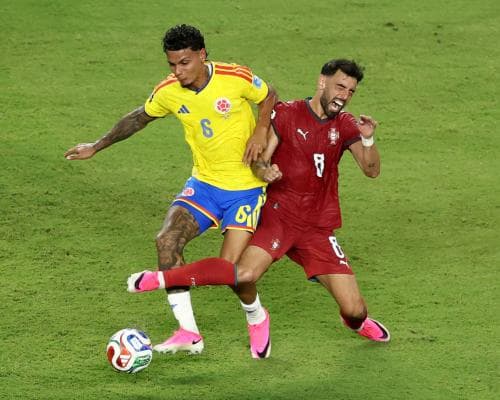
Why This Match Was More Than Just Three Points
The stakes were crystal clear. A win for Portugal would hand them the group crown and a smoother path to the round of sixteen. A victory for Colombia would flip the table, sending the South American side to the top and leaving Portugal to chase a second place finish. A draw would keep the table tight, forcing goal difference to become the decisive factor. In a tournament where a single goal can rewrite a nation’s destiny, the atmosphere in the stadium was electric, the humidity oppressive and every fan on the edge of their seat.
The Early Narrative – A Battle of Possession
From the first whistle both teams displayed a willingness to press high. Colombia, playing in their iconic yellow, moved the ball from one end of the pitch to the other with a rhythm that reminded many of their 1994 campaign. Portugal, in a bold red, responded with quick switches of play, trying to exploit the spaces left by the Colombian full‑backs.
By the 20th minute the statistics already told a story of dominance. Colombia registered twenty‑four attempts, six of which tested the Portuguese goalkeeper. Portugal, meanwhile, managed thirteen shots, two on target. The expected goals (xG) model placed Colombia at 1.63 and Portugal at 0.69, suggesting that the South Americans were creating higher quality chances even though the scoreboard remained blank.
The Off‑Side Controversy That Almost Changed the Game
Around the 30th minute a Colombian cross found the head of a forward in a dangerous position. The assistant raised his flag for off‑side. Replays showed the attacker was only a toe ahead of the defender – a margin that falls well within the human error range. The referee’s decision stood, sparking a chorus of debate among the commentators. While the call was technically correct, the incident highlighted how razor‑thin the line can be between a goal and a missed opportunity.
Goalkeeper Heroics – Costa and Vargas Rise to the Occasion
Portugal’s keeper Diogo Costa delivered a performance that will be remembered for weeks. He made a series of reflex saves, including a fingertip parry on a low drive from Luis Díaz and a spectacular one‑handed block on a header from James Rodríguez. On the Colombian side, Camilo Vargas proved equally vital, pulling off a point‑blank stop from a Cristiano Ronaldo free‑kick that seemed destined for the net. Both keepers kept their teams in the game, turning what could have been a high‑scoring affair into a tactical stalemate.
The Tactical Shifts at Half‑Time
When the whistle blew for the break the scoreline read 0‑0, but the coaches were already making adjustments. Portugal introduced Rafael Leão for João Félix, adding fresh legs to the attack. Portugal also brought on Samú Costa for Vitinha, hoping to tighten the midfield. Colombia responded by swapping Daniel Muñoz for Santiago Arias, looking to inject more energy on the flanks.
The second half began with Portugal pressing higher, trying to force a mistake from the Colombian back line. Colombia, aware of the danger, shifted to a more compact shape, forcing Portugal to play through the middle where the Portuguese midfielders tried to thread passes to the forwards.
The Moment of Truth – Late Drama and Near Misses
As the clock edged past the 80th minute the tension reached its peak. A long throw from the Portuguese side found João Félix, who attempted a chest control before his shot sailed over the bar. Minutes later, a Colombian counter‑attack saw Luis Díaz break free, only to see his effort clipped by the post.
In the final five minutes the match seemed destined for a draw, but a late surge from Portugal threatened to tip the balance. A free‑kick from the edge of the box was struck by Ronaldo, the ball curling towards the top corner, only to be denied by Vargas’s outstretched arms. The final whistle blew with the score unchanged, leaving both sets of fans to wonder what could have been.
What the Result Means for the Knockout Stage
Portugal’s draw secured them the group’s top spot thanks to a superior goal difference. They will now face the third place team from Group L in Kansas City, a match that could see them up against a side like England, Ghana or Croatia depending on other results. Colombia, as runners‑up, travel to Toronto to meet the runner‑up from Group L, a fixture that promises another intense battle.
The outcome also has indirect implications for other nations still fighting for survival. A win for Portugal would have pushed Iran into the round of thirty‑two, while a Colombian victory could have opened the door for Jordan to cause an upset against Argentina. The ripple effect of this single match illustrates how interconnected the tournament truly is.
Player Spotlights – Who Stood Out?
James Rodríguez – At 34 the former Golden Boot winner may not possess the same explosiveness he showed in 2014, but his vision and passing range remained vital for Colombia. His left‑footed strike in the first half forced Costa into a diving save that could have changed the scoreline.
Cristiano Ronaldo – The 41‑year‑old forward finally broke his World Cup goal drought with a brace against Uzbekistan earlier in the tournament. In this match he demonstrated his trademark movement, pulling defenders out of shape and creating space for his teammates, even if his own shots failed to find the net.
Diogo Costa – The Portuguese goalkeeper’s composure under pressure was a key factor. His ability to command the box and make decisive interventions kept Portugal in contention throughout the night.
Camilo Vargas – The Colombian keeper’s reflexes were on full display, especially when he denied a Ronaldo free‑kick that looked certain to become a goal.
Rafael Leão – The Portuguese forward’s introduction in the second half added a new dimension to the attack, his pace stretching the Colombian defence and creating opportunities for his teammates.
Statistical Snapshot
Statistic | Colombia | Portugal |
|---|---|---|
Shots (total) | 24 | 13 |
Shots on target | 6 | 2 |
Expected goals | 1.63 | 0.69 |
Possession (%) | 55 | 45 |
Pass accuracy (%) | 84 | 81 |
Fouls committed | 12 | 10 |
Yellow cards | 2 | 1 |
The numbers reinforce the narrative: Colombia generated more chances and held a higher possession rate, yet Portugal’s defensive discipline and goalkeeper excellence kept the match level.
The Human Element – Fans, Weather and Emotion
Miami’s climate added an extra layer of difficulty. Temperatures hovered around 87 degrees with humidity pushing the 70 percent mark. Players needed regular hydration breaks, and the crowd’s energy ebbed and flowed with each near miss. A moment of silence was observed for the victims of the recent Venezuelan earthquake, a reminder that sport exists within a broader human context.
Looking Ahead – What to Expect in the Next Rounds
Portugal’s path now leads them to a clash with a third place team that could be a dark horse. Their experience in knockout football, combined with the leadership of Ronaldo and the solidity of their back line, gives them a slight edge. Colombia, meanwhile, will rely on the creativity of Rodríguez and the speed of Díaz to break down a disciplined opponent in Toronto.
Both teams will need to manage the physical toll of a demanding tournament schedule, especially with travel across time zones and the lingering effects of the Miami heat. Squad depth will be tested, and the coaches’ ability to rotate players without losing cohesion will be crucial.
Final Thoughts – A Match That Lived Up to Its Billing
The Colombia versus Portugal encounter delivered everything a neutral fan could ask for: tactical intrigue, moments of individual brilliance, controversial decisions and a nail‑biting finish. While the scoreline remained unchanged, the storylines that emerged will echo throughout the rest of the competition.
For supporters of either nation the night in Miami was a reminder that football is as much about the margins as it is about the goals. A toe‑length off‑side, a fingertip save, a missed free‑kick – each tiny event shaped the final outcome. As the tournament moves forward, the lessons learned from this match will inform strategies, player selections and the mental approach of both squads.
Whether you are a die‑hard fan, a casual observer or a budding analyst, the drama of this Group K showdown offers a masterclass in how the beautiful game can captivate, surprise and inspire, even under the most challenging conditions.