
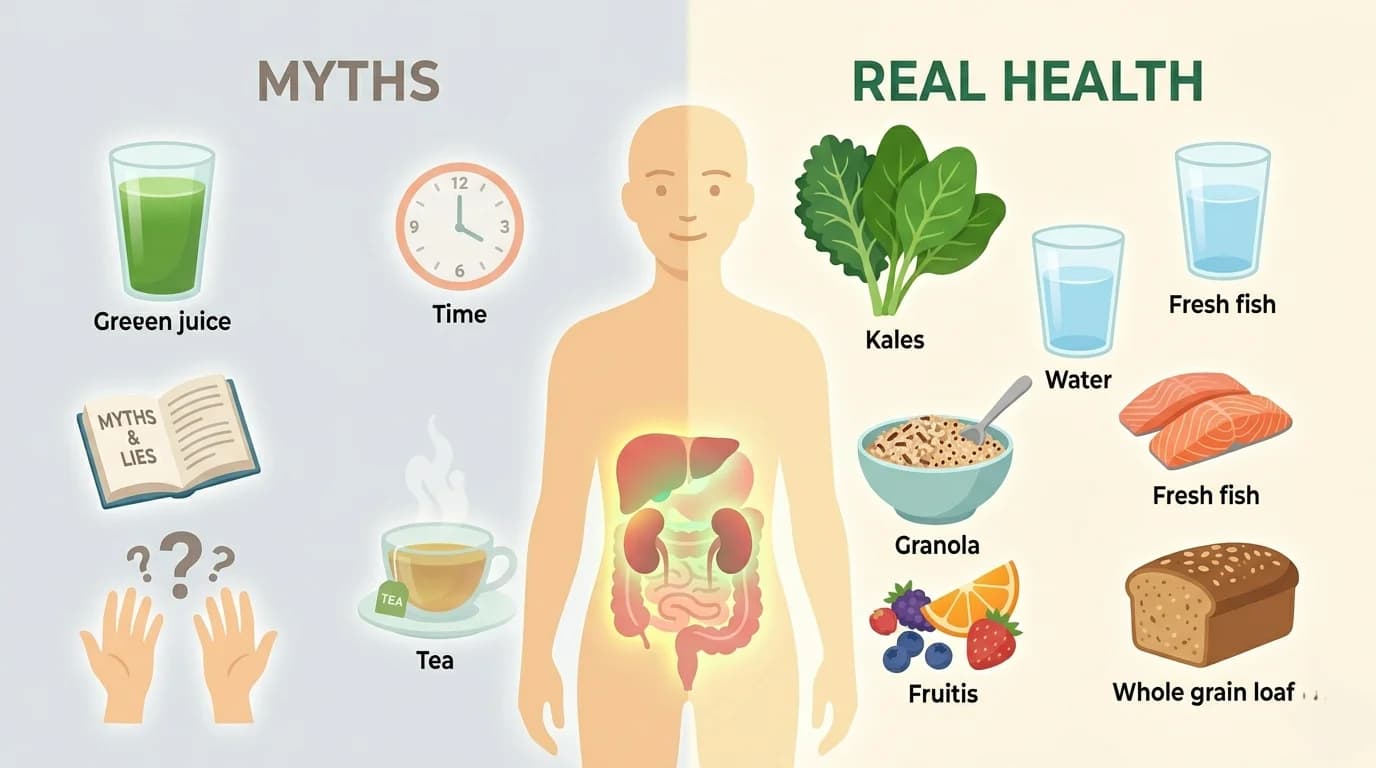
Right now, somewhere in the world, someone is paying sixty dollars for a bottle of green liquid that promises to "flush toxins" from their body in three days. Meanwhile, their liver, which has been doing exactly that job for free since the day they were born, is quietly wondering why nobody ever sends it a thank you card.
If you have ever felt bloated after a big weekend and thought a juice cleanse or a strict fast might "reset" your system, you are not alone. Detox culture is everywhere, and the wellness industry has turned the word "toxins" into one of the most profitable terms in modern marketing. But what does the science actually say? Which of these approaches help, which ones do nothing, and which ones might quietly do more harm than good? Let's break it down, one trend at a time.
Your Body Already Has a Built In Detox System
Before spending money on any cleanse, it helps to understand what your body is already doing every single hour of every day.
Your liver filters and breaks down everything from medications to alcohol to natural byproducts of digestion. Your kidneys filter your blood and remove waste through urine. Your lungs expel carbon dioxide with every breath. Your digestive system, skin, and lymphatic system all play supporting roles in keeping your internal environment balanced.
This system is called homeostasis, and it works constantly, without needing a special tea, powder, or seven day program to "activate" it. No food or supplement can make your liver or kidneys work faster or better than they already do when you are healthy. In fact, some detox products can place extra strain on these organs rather than support them.
Detox Diets and Teas: Marketing Versus Reality
Most commercial detox diets follow a similar pattern. They restrict calories, cut out entire food groups, and often include a laxative or diuretic ingredient such as senna, dandelion root, or caffeine.
Here is what tends to happen on these plans:
You may step on the scale and see a lower number within a day or two. This is mostly water weight and the contents of your digestive tract, not fat loss, and it returns once you go back to normal eating.
You might feel "lighter" temporarily due to bloating reduction, but this is often followed by rebound bloating once digestion returns to normal.
If the product contains laxative herbs, frequent use can lead to dehydration, electrolyte imbalances, and in some cases dependency, where your digestive system struggles to function normally without them.
There is no credible scientific evidence that any tea, pill, or shake removes environmental toxins, heavy metals, or "built up waste" from your colon or bloodstream. If you were genuinely exposed to a dangerous toxin, the appropriate response is medical treatment, not a smoothie.
Juice Cleanses: What You Gain and What You Lose
Juice cleanses are popular for a simple reason. They feel virtuous, they are colorful enough for social media, and they promise quick results.
On the plus side, a juice cleanse can increase your intake of vitamins, minerals, and antioxidants for a short period, and it may encourage some people to eat more produce afterward.
On the downside, most juices strip away the fiber found in whole fruits and vegetables. Fiber slows sugar absorption, feeds beneficial gut bacteria, and keeps you feeling full. Without it, juice can spike your blood sugar quickly, leading to energy crashes and increased hunger later.
Most cleanses also provide very few calories and almost no protein or fat, which means your body may start breaking down muscle tissue for energy if the cleanse lasts more than a day or two. Any weight lost is typically water and glycogen, and it comes back within days of returning to normal meals.
If you enjoy fresh juice as an occasional addition to a balanced diet, that is perfectly fine. The issue is treating it as a replacement for real food over multiple days, especially as a way to "undo" previous eating habits.
Fasting: Separating the Hype From the Evidence
Fasting is where things get more nuanced, because unlike most detox products, fasting has actually been studied in real clinical research, with mixed but interesting results.
Time restricted eating, often described as 16:8, simply means eating within an eight hour window and fasting for the remaining sixteen hours. Several studies suggest this can support weight management for some people, mainly because it naturally reduces late night snacking and overall calorie intake.
Alternate day fasting and similar patterns have shown, in controlled studies, measurable reductions in body weight, waist size, and blood pressure compared to a regular diet. However, research consistently shows these patterns are not more effective for weight loss than simply eating fewer calories every day in a sustainable way.
It is also worth knowing that fasting is not risk free for everyone. Some research has raised concerns about extended fasting and restrictive eating windows being linked to loss of muscle mass, disrupted sleep and circadian rhythms, and in certain populations, increased cardiovascular risk over the long term. These findings are still being studied and are not the final word, but they are a good reminder that fasting is a tool, not a guaranteed health upgrade, and it affects different people differently.
Multi day water only fasts, sometimes promoted as extreme "detox resets," carry real risks including dangerously low blood sugar, electrolyte imbalances, gallstones, and fainting, and should never be attempted without direct medical supervision.
What Actually Works for Supporting Your Body
If the goal is to feel better, have more energy, and support the organs that already handle detoxification, the most effective strategies are also the least exciting ones.
Drinking enough water throughout the day supports kidney function and digestion far more reliably than any specialty drink.
Eating plenty of fiber from vegetables, fruits, legumes, and whole grains feeds your gut bacteria and supports regular digestion.
Getting consistent, quality sleep allows your brain's own waste clearance systems to function properly overnight.
Moving your body regularly supports circulation and lymphatic flow, which helps your cells exchange nutrients and waste efficiently.
Reducing alcohol and highly processed foods lightens the actual workload on your liver, which is the closest thing to a real detox you can do through diet.
None of this sounds as exciting as a three day cleanse, but it is what the evidence consistently supports.
Who Should Be Extra Cautious
Detox diets, juice cleanses, and fasting protocols are not appropriate for everyone. People with a history of disordered eating, pregnant or breastfeeding individuals, people with diabetes or other conditions requiring stable blood sugar, children, teenagers, and older adults should approach these trends with particular caution, and ideally speak with a healthcare provider before trying them.
If a cleanse or fasting plan ever leaves you feeling dizzy, extremely fatigued, irritable, or unable to concentrate, that is your body asking you to stop, not a sign that "toxins are leaving."
The Bottom Line
Your body is not a dirty machine waiting for a juice powered reset. It is a remarkably efficient system that filters, repairs, and balances itself every day, as long as you give it the basics it needs. Some forms of time restricted eating may fit well into a healthy lifestyle for certain people, and an occasional fresh juice can be a nice addition to a varied diet. But the dramatic claims behind most detox products and extreme cleanses simply do not hold up.
If you want a real reset, it looks a lot less like a green juice and a lot more like water, vegetables, sleep, and movement. It is less glamorous, but it is the version that actually works.