
Overview
Live coverage of the evolving U.S.–Iran talks concluded early this morning. A full report is now available for readers who wish to explore the details of the negotiations, which appear to be moving toward a tentative peace agreement. The following summary highlights the most significant developments of the day.
U.S.–Iran Negotiations
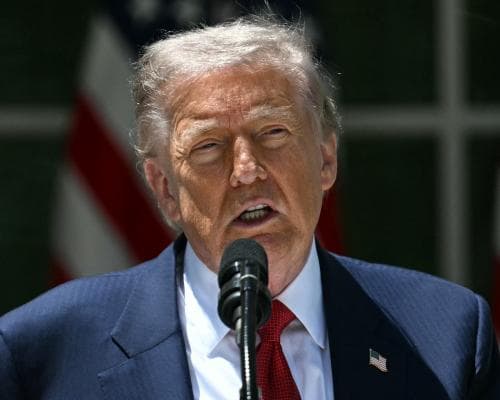
President Donald Trump announced on Sunday that he had instructed his team not to rush into any agreement with Iran. He emphasized that both parties must take the necessary time to reach a durable solution. The president also confirmed that the naval blockade of Iranian vessels in the Strait of Hormuz will remain in effect until a formal agreement is signed, certified, and implemented.
A senior administration official, speaking on condition of anonymity, said Iran had agreed in principle to reopen the strait in exchange for the removal of the U.S. blockade and the disposal of highly enriched uranium. No official confirmation from Tehran has been received. Iranian officials indicated that future stages of the talks could produce workable formulas to resolve the uranium dispute.
The White House reiterated that the United States will maintain the blockade until all conditions of a final deal are met. President Trump added that any agreement he reaches with Iran will be fundamentally different from the 2015 accord withdrawn by his administration in 2018. He asserted that his deal will be “good and proper” and warned critics to refrain from judging a process they do not fully understand.
Secretary of State Marco Rubio told the New York Times that a regional consensus supports the negotiations, but a nuclear agreement cannot be finalized in a matter of hours. He stressed that nuclear discussions are highly technical and require careful deliberation.
Israeli and Lebanese Positions
Prime Minister Benjamin Netanyahu confirmed that he and President Trump agreed any final accord must eliminate the nuclear threat entirely. He also reiterated U.S. support for Israel’s right to defend itself on all fronts, including against threats emanating from Lebanon.
Despite a nominal cease‑fire brokered by the United States, Israeli airstrikes continued in southern and eastern Lebanon on Sunday. The Lebanese health ministry reported two fatalities, including a paramedic from a Hezbollah‑affiliated medical committee. The ministry’s latest figures place the total death toll since 2 March at 3,123.
Hezbollah leader Naim Qassem expressed hope that a comprehensive Iran–U.S. agreement would include provisions for Lebanon and that his organization would be incorporated into the final settlement.
Market Reactions
Optimism surrounding a potential Iran deal prompted a decline in oil prices and a modest rise in equity markets. Brent crude fell more than four percent to $98.83 per barrel, while U.S. West Texas Intermediate dropped to $92.03 per barrel. Nasdaq futures advanced 1.2 percent and Japan’s Nikkei index rose three percent.
The U.S. dollar slipped against major currencies in early Asian trading. It was down 0.2 percent against the yen, while the euro gained 0.3 percent and the British pound rose 0.4 percent. The Australian and New Zealand dollars also posted modest gains.
Analysts noted that markets remain patient, awaiting concrete confirmation that the Strait of Hormuz will reopen. Pepperstone Group’s head of research, Chris Weston, said the base case for a deal remains solid, but timing remains uncertain.
Humanitarian and Diplomatic Developments
Eleven Australian citizens who participated in a flotilla attempting to deliver aid to Gaza were released from Israeli detention and welcomed home with public applause. The group alleges mistreatment by Israeli forces, including physical injuries and alleged use of unknown substances.
Foreign ministers from eight Arab‑Islamic nations condemned Israeli security minister Itamar Ben‑Gvir after he posted a video showing detained Gaza‑flotilla activists bound and kneeling. The ministers described the act as a disgraceful violation of human dignity and international law.
Outstanding Issues
Several key points remain unresolved. Iran continues to demand the release of tens of billions of dollars in frozen oil revenues held in foreign banks. The United States has been described by Iranian state media as obstructing parts of the agreement, particularly the clause concerning frozen assets.
Israel is reportedly pressuring the United States to include language that would permit further Israeli military operations in Lebanon, while Tehran insists that any cease‑fire must extend to its southern neighbor.
Conclusion
The negotiations between the United States and Iran are progressing, but significant details have yet to be finalized. Both sides have signaled a willingness to move forward, yet external pressures and unresolved technical issues continue to shape the trajectory of the talks. Market participants and regional actors alike are watching closely for the next official announcement.