
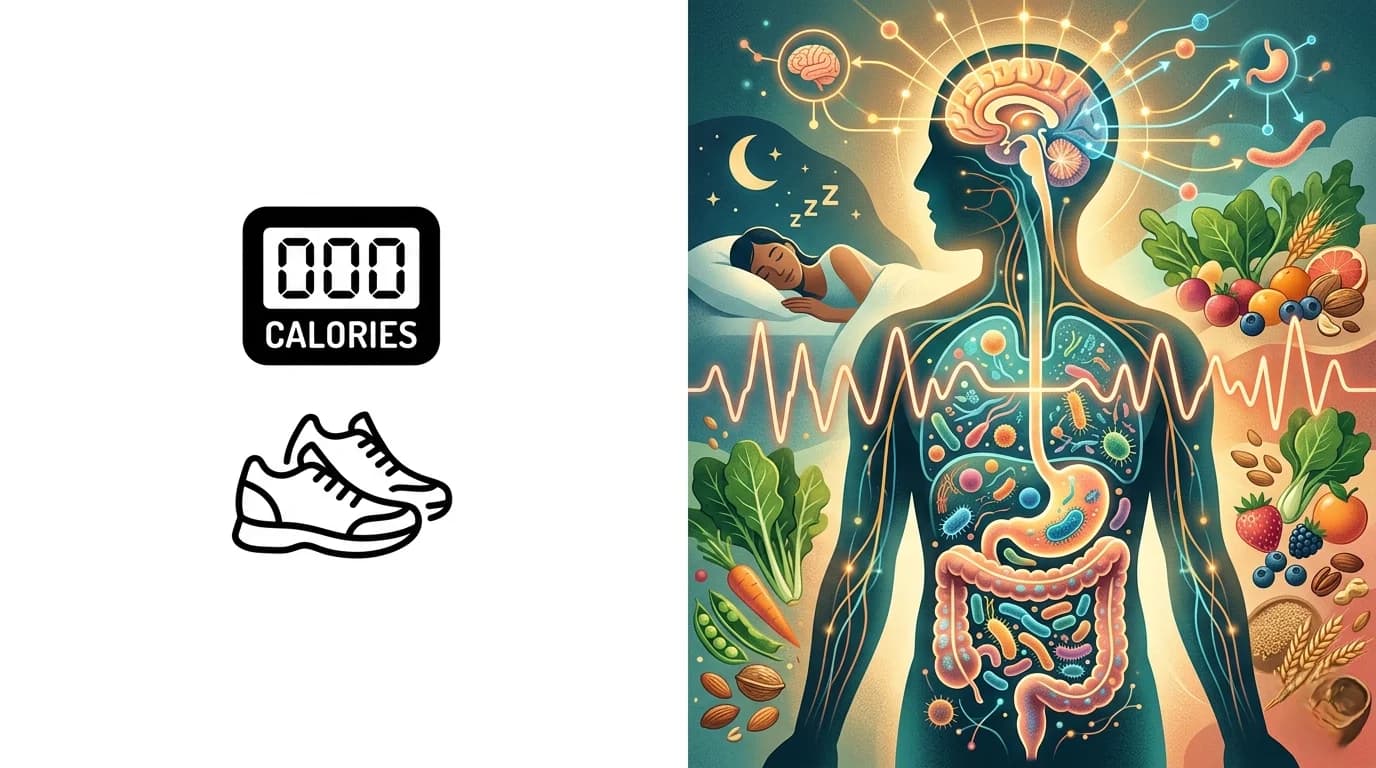
Millions of people have done everything right. They counted every calorie, hit the gym five days a week, stayed off sugar, and still watched the scale refuse to move. Then they blamed themselves. They were told the formula was simple, and if it was not working, the failure was personal. The truth is far more complicated, far more interesting, and far more forgiving than anyone ever told you.
The advice to simply eat less and move more is not wrong. It is just embarrassingly incomplete. And that incomplete picture has caused decades of frustration, shame, and failed attempts for people who were never actually failing at all. They were fighting biology with willpower, and biology almost always wins.
Here is what science actually says about why your body holds onto weight, and what genuinely moves the needle.
Your Hormones Are Running the Show, Not Your Willpower
Before you make a single food decision each day, your hormones have already been at work shaping your hunger, your cravings, your energy levels, and your fat storage patterns. The two most critical players in this system are leptin and ghrelin.
Leptin is produced by fat cells and signals to your brain that you have enough stored energy. When this system works properly, you feel satisfied after meals and do not obsess over food between them. However, in people who are overweight or who have been chronically dieting, leptin resistance develops. Your fat cells are producing plenty of leptin, but your brain has stopped listening. The signal of fullness never arrives clearly, and hunger continues even when the body has more than enough stored fuel.
Ghrelin works from the opposite direction. It is the hunger hormone, rising before meals and dropping after eating. When you cut calories significantly, ghrelin levels rise sharply and stay elevated for months. Your body is actively working to drive you back to your previous weight, flooding your system with hunger signals that make restricting food feel like a losing battle against your own biology.
Eating less and moving more does not fix these hormonal disruptions. Addressing them requires a completely different strategy.
The Insulin Problem Nobody Talks About Loudly Enough
Insulin is the hormone responsible for moving glucose from your bloodstream into your cells for energy. When your cells are sensitive to insulin, this system works beautifully. When insulin resistance develops, the body compensates by producing more and more insulin, and elevated insulin is one of the most powerful signals for fat storage the body knows.
Chronically high insulin levels do not just cause fat storage. They also actively block fat burning. When insulin is elevated, your body essentially locks the door to its fat stores and refuses to use them for fuel regardless of how large your calorie deficit might be.
Ultra-processed carbohydrates, refined sugars, chronic stress, poor sleep, and sedentary behavior all contribute to insulin resistance. The "move more" part of the classic advice helps with insulin sensitivity, but without addressing the dietary quality and lifestyle factors that drive insulin resistance in the first place, the impact is limited and slow.
Sleep Is Not Optional. It Is Metabolic Medicine.
The connection between sleep deprivation and weight gain is one of the most robustly supported findings in modern obesity research, and it is almost never mentioned alongside the eat less, move more advice.
Just one night of poor sleep measurably increases ghrelin, decreases leptin, and raises cortisol. After a bad night, the brain's reward centers light up more intensely in response to high-calorie food images. Your prefrontal cortex, responsible for impulse control and decision-making, becomes less active. You are biologically primed to want more food, specifically the most calorie-dense options available, and you are less equipped to resist those impulses.
Chronically sleeping fewer than seven hours per night is associated with significantly higher rates of obesity, even in people who exercise regularly and report eating reasonable diets. People who prioritize improving their sleep quality frequently report effortless reductions in appetite and cravings without changing anything else. Sleep is the free, powerful metabolic tool that nobody puts on the prescription pad.
Your Gut Microbiome Is a Weight Management Organ
Inside your digestive system lives a community of trillions of microorganisms that collectively influence how many calories you extract from food, how you store fat, how your appetite hormones function, and how your immune system responds to inflammation.
Research comparing the gut microbiomes of lean and obese individuals consistently finds meaningful differences in bacterial diversity and composition. Transferring gut bacteria from obese mice into germ-free lean mice causes those lean mice to gain fat without any change in diet. This is striking evidence that the microbiome is not a passive observer of your metabolism but an active participant in it.
What disrupts the gut microbiome? Antibiotics, ultra-processed food, artificial sweeteners, chronic stress, low fiber intake, and insufficient sleep. What builds a healthy, diverse microbiome? A wide variety of fiber-rich plants, fermented foods, adequate rest, and stress management. None of these appear in the standard eat less, move more prescription.
Chronic Stress Is Physically Storing Fat on Your Body
Stress is not just a mental state. It is a full-body biological event with direct consequences for your weight and body composition.
When you experience stress, your adrenal glands release cortisol. Cortisol is a survival hormone designed to mobilize energy rapidly in response to perceived threats. It does this by raising blood sugar, suppressing non-essential functions, and directing fat storage toward the abdomen, where it can be accessed quickly for energy if needed.
In modern life, stressors are rarely resolved by running from a predator. They are prolonged, chronic, and unrelenting. Ongoing high cortisol keeps blood sugar elevated, keeps insulin elevated, keeps the body in fat storage mode, and drives intense cravings for high-calorie comfort foods that temporarily lower the stress response.
People under significant chronic stress who attempt to lose weight by restricting food and adding intense exercise are often compounding their cortisol burden rather than addressing the root issue. This is why extreme diet and exercise programs frequently fail people who are already living in high-stress environments.
Metabolic Adaptation: Your Body Fights Back
One of the most underappreciated phenomena in weight loss science is metabolic adaptation, sometimes called adaptive thermogenesis.
When you reduce your calorie intake, your body does not passively accept the deficit. It adapts. It reduces your basal metabolic rate, lowers your body temperature, decreases the energy burned during movement and exercise, reduces muscle protein synthesis, and increases metabolic efficiency so that every calorie you consume goes further than it did before.
Research following contestants from a popular weight loss television program found that years after the competition ended, their metabolic rates remained dramatically suppressed compared to people of similar size who had never dieted aggressively. The body had permanently recalibrated to resist returning to its previous state.
This means that aggressive calorie restriction and intense exercise often produce a metabolic environment that makes future weight loss progressively harder. The strategy that worked initially stops working not because of personal failure but because of a measurable biological counter-response that the body enacts automatically.
Genetics Write More of the Story Than Anyone Wants to Admit
Twin studies have consistently found that body weight and fat distribution are among the most heritable traits humans have, with heritability estimates ranging from 40 to 70 percent depending on the population studied.
Genetics influence your basal metabolic rate, your appetite hormone baseline, your taste preferences, your tendency toward emotional eating, how your body partitions fuel between fat storage and immediate energy use, and your psychological response to food reward.
This does not mean your weight is predetermined or that nothing you do matters. It means that two people eating identical diets and following identical exercise programs will not experience identical results, and one of them is not more disciplined or more deserving than the other. Bodies are different, and pretending they are not helps absolutely no one.
Ultra-Processed Foods Are Engineered to Override Your Biology
The "eat less" part of the conventional advice assumes that eating less is a matter of choice and discipline. It does not account for the fact that a significant portion of the modern food supply is specifically engineered to override the brain's natural satiety mechanisms.
Food scientists invest enormous resources into finding the precise combinations of fat, sugar, salt, and texture that produce maximal reward in the brain's dopamine system with minimal satiety. These foods trigger the same neurological pathways as addictive substances, and in brain imaging studies, they produce responses that parallel drug cravings in vulnerable individuals.
When your food environment is saturated with products specifically designed to make you eat more than you need, telling someone to simply eat less is like telling someone to simply stop breathing when the air is full of smoke. The environment itself is working against the goal. Changing what is available and accessible in your personal food environment is a more effective intervention than relying on willpower against an engineered product.
The Thyroid Connection That Explains Stubborn Weight
Your thyroid gland produces hormones that regulate the speed of virtually every metabolic process in your body. When thyroid output is optimal, metabolism hums along efficiently. When thyroid function is low, even slightly below optimal levels, metabolism slows significantly.
Subclinical hypothyroidism, a condition where thyroid lab values fall within the technically normal range but function is suboptimal, is remarkably common and frequently undiagnosed. Symptoms include persistent fatigue, difficulty losing weight despite reasonable diet and exercise, cold intolerance, brain fog, and depression.
People with undiagnosed thyroid dysfunction who are advised to eat less and move more to lose weight are being given advice that simply cannot work in their particular physiological context. Identifying and addressing thyroid dysfunction is a prerequisite for effective weight management in affected individuals, not an afterthought.
Inflammation Is Silently Holding Your Weight in Place
Chronic low-grade inflammation is now understood to be a central feature of obesity rather than simply a consequence of it, and the relationship runs in both directions.
Inflammatory signaling disrupts insulin sensitivity, impairs leptin signaling, damages gut barrier integrity, disrupts the hypothalamic regulation of hunger and metabolism, and promotes fat storage particularly around the abdomen. People with high levels of systemic inflammation struggle with weight loss in ways that pure calorie math cannot explain.
Major drivers of chronic inflammation include ultra-processed food, seed oils in large quantities, chronic psychological stress, poor sleep, sedentary behavior, gut microbiome imbalance, environmental toxin exposure, and nutrient deficiencies particularly in magnesium, zinc, and vitamin D.
Addressing inflammation through whole-food nutrition, sleep, stress management, and targeted supplementation where deficiencies exist often unlocks weight loss progress in people who had been doing everything by the standard playbook without results.
The Mental Health Piece That Changes Everything
Emotional eating, binge eating disorder, and food-related anxiety are not character flaws or signs of weakness. They are recognized psychological conditions with neurological and often trauma-based roots, and they are extraordinarily common among people who have spent years in cycles of restrictive dieting.
Restrictive dieting itself is a significant psychological stressor that can trigger or worsen disordered eating patterns. When food is forbidden, it becomes more psychologically compelling. The restriction and binge cycle that many dieters experience is not a failure of willpower. It is a predictable neurological and psychological response to deprivation.
Research consistently shows that approaches focused on building a healthy relationship with food, reducing dietary restriction, improving body image, and addressing underlying emotional regulation produce better long-term outcomes than calorie-focused approaches alone. Mental health is not separate from metabolic health. They are deeply, biologically intertwined.
What Actually Works: A More Complete Picture
Science points toward a set of strategies that work with the body's biology rather than against it. These include consistently prioritizing seven to nine hours of quality sleep, managing chronic stress through genuinely effective methods rather than pushing harder through it, building a gut microbiome by eating a wide diversity of whole plant foods, eliminating or dramatically reducing ultra-processed food to allow hunger hormones to recalibrate, addressing any underlying hormonal or metabolic conditions with appropriate clinical support, and building sustainable movement patterns that do not spike cortisol further.
None of this is as simple as a five-word slogan. But it is far more likely to work and far less likely to leave you blaming yourself for something that was never entirely within your control in the first place.
Your body is not the problem. The oversimplified advice was.
Final Thought
Weight loss is one of the most biologically complex processes a human body undertakes. Reducing it to a math equation was never accurate, and the evidence has been piling up against that idea for decades. In 2026, anyone still offering "eat less, move more" as a complete solution is ignoring an enormous body of science that deserves to be taken seriously.
You deserve the complete story. Now you have it.