
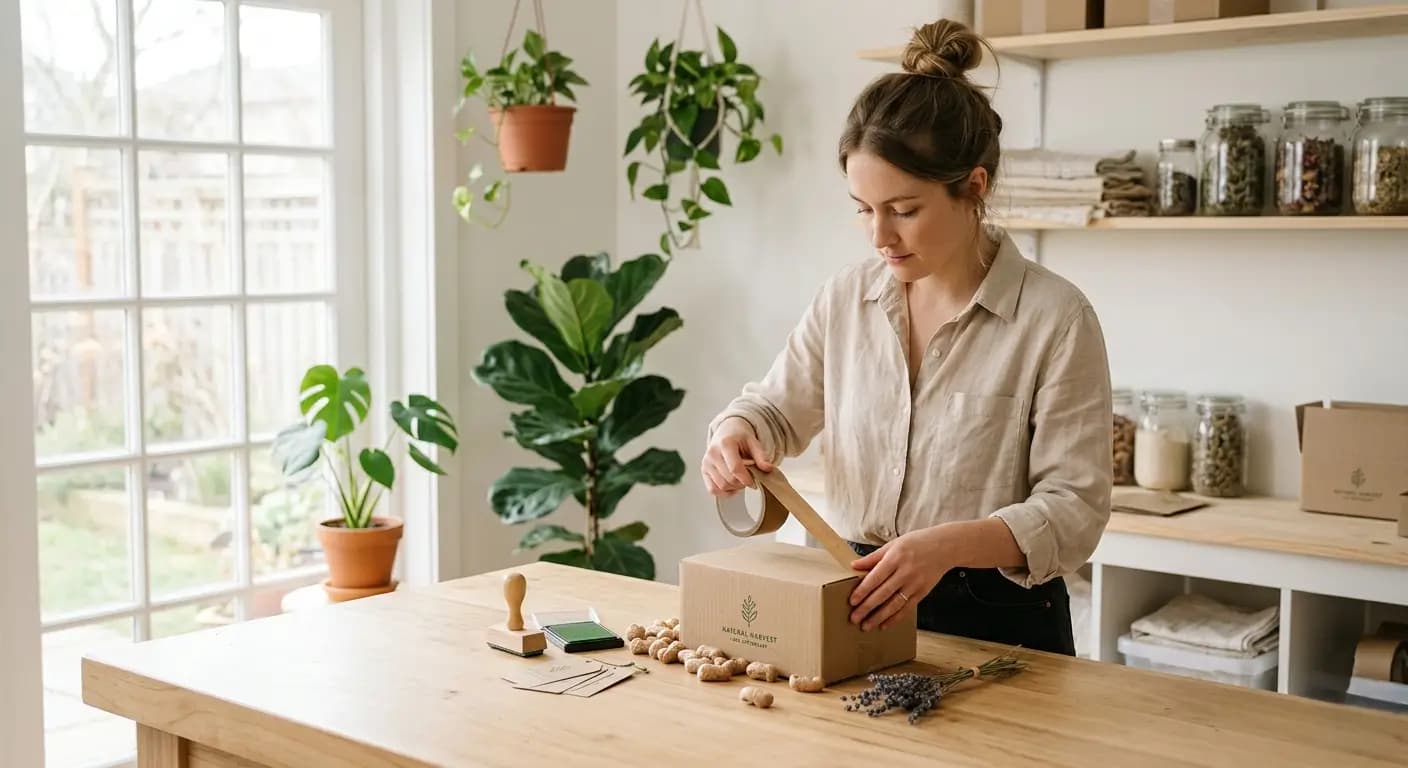
Every time a customer unwraps an order from your small business, they are making a judgment. That judgment no longer stops at the product quality. In 2026, it extends to the box, the filler, the tape, and the very ethos those materials convey. Your packaging speaks before you do. And if that voice does not champion sustainability, you risk being silenced by a market that now demands environmental responsibility. This guide is your comprehensive blueprint. It walks you through everything you need to know about eco friendly packaging, from material choices to cost control, from design hacks to the regulations shaping 2026. By the time you finish reading, you will have a clear path to packaging that protects both your products and the planet while strengthening your brand.
The urgency is real. Recent surveys show that more than eighty percent of consumers actively seek out brands with sustainable packaging. Governments worldwide are tightening rules around single use plastics and non recyclable waste. For small businesses, the shift is no longer optional. It is a strategic move that can reduce long term costs, build unshakable loyalty, and set you apart in crowded marketplaces. Yet the transition can feel overwhelming. Where do you start? How do you avoid greenwashing? What materials actually deliver on their eco promise without breaking your budget? Let’s answer every one of those questions, step by step.
What Eco Friendly Packaging Really Means in 2026
Before diving into materials and methods, it is essential to clarify the terminology. Eco friendly packaging is an umbrella term that refers to any packaging solution designed to minimize environmental harm across its life cycle. In 2026, the definition has sharpened. It now emphasizes not just the source of the materials but also the manufacturing process, the energy used, the transport footprint, and the end of life scenario for the packaging. A truly eco friendly package is one that is responsibly sourced, produced with minimal toxins, lightweight to reduce shipping emissions, and easily compostable, recyclable, or reusable in the customer’s local infrastructure.
Several related terms often cause confusion. Biodegradable packaging breaks down naturally over time by microorganisms, but the timeline and conditions vary widely. Compostable packaging goes further; it decomposes into nutrient rich soil within a specific timeframe in a composting environment, either home or industrial. Recyclable packaging can be reprocessed into new materials, but only if the local recycling facilities accept it. Reusable packaging encourages multiple uses before disposal. Recycled content packaging is made from materials that have already been used and reprocessed. And then there are renewable materials, such as bamboo, hemp, or mycelium, that regenerate quickly without depleting ecosystems. Understanding these distinctions is the first step toward making informed choices that align with your brand values and your customers’ expectations.
Why Small Businesses Should Make the Switch Now
In 2026, sustainable packaging is not just an ethical choice. It is a powerful business lever. The first benefit is brand differentiation. When a customer receives an order wrapped in plastic bubble mailers among a sea of identical shipments, your product blends in. But when they open a beautifully crafted box made from recycled cardboard, cushioned with biodegradable packing peanuts, and sealed with paper tape printed with plant based ink, they remember you. That unboxing moment becomes shareable content. It gets photographed, filmed, and posted to social media, giving you free marketing that resonates deeply with eco conscious audiences.
Customer loyalty follows close behind. A 2026 consumer study found that seventy four percent of shoppers are more likely to remain loyal to a brand that uses sustainable packaging. People want to feel good about their purchases. When you align your packaging with their values, you transform a simple transaction into a shared mission. They become repeat buyers and vocal advocates.
Cost savings are another compelling driver. Yes, some eco friendly materials carry a higher upfront price tag. But when you reduce packaging weight and dimensions, you slash shipping costs. Many small businesses also discover that by designing minimalist packaging, they need fewer materials overall, which offsets the unit price difference. Plus, tax incentives and grants for green business practices are expanding in 2026, especially in regions prioritizing circular economy goals. By adopting eco friendly packaging early, your business may qualify for financial support that further eases the transition.
Finally, regulatory compliance is becoming unavoidable. Extended Producer Responsibility laws are spreading, making brands financially responsible for the end of life management of their packaging. The EU’s Packaging and Packaging Waste Directive continues to tighten, and multiple U.S. states now have strict recycled content mandates and bans on certain plastic packaging. By proactively switching, you avoid last minute scrambles, fines, and supply chain disruptions.
Exploring the Landscape of Eco Friendly Packaging Materials
The material you choose becomes the foundation of your sustainable packaging strategy. In 2026, the options are more diverse and accessible than ever before. Corrugated cardboard remains a workhorse for good reason. It is lightweight, sturdy, and widely recyclable. Opt for versions with high post consumer recycled content and avoid glossy coatings that impede recycling. Molded pulp, made from recycled paper or agricultural waste, offers excellent cushioning for fragile items and can be composted at home.
Bioplastics have matured significantly. Polylactic acid, or PLA, derived from corn starch or sugarcane, is used for clear windows and compostable bags. However, PLA requires industrial composting facilities, so you must guide customers on proper disposal. A newer star is PHA, a bioplastic produced by bacteria, which biodegrades in marine and soil environments without special conditions, making it a game changer for 2026. Seaweed based packaging films and sachets are also entering the mainstream, dissolving in water and leaving zero waste.
Mushroom packaging, grown from mycelium and agricultural byproducts, provides a compostable alternative to styrofoam. It is ideal for protective corner pieces and custom molds. For flexible mailers, compostable versions made from a blend of PBAT and PLA or even paper with a thin compostable liner are replacing traditional poly mailers. Recycled paper and kraft paper remain versatile and cost effective, perfect for wrapping, void fill, and outer cartons. Glass and aluminum, though heavier, are infinitely recyclable and convey a premium, reusable aesthetic for products like candles, cosmetics, and beverages. Water activated paper tape reinforced with fiberglass free plant fibers completes the eco friendly package, securing boxes while being fully recyclable.
Inks and adhesives matter too. Traditional petroleum based inks contain volatile organic compounds. Switch to soy based or algae based inks that are renewable and easier to remove during recycling. Water based adhesives break down more readily than hot melt synthetics. Even small details like labels and stickers can be made from compostable paper with non toxic adhesives, ensuring that no hidden plastic contaminates the recycling stream.
Designing Eco Friendly Packaging That Captivates
Sustainability and aesthetics are not opposing forces. In fact, constraint often fuels creativity. Begin with right sizing. A package that fits your product snugly reduces the need for void fill, cuts material use, and lowers dimensional weight shipping costs. Minimalism is your ally. Eliminate unnecessary layers, inserts, and promotional leaflets that will be immediately discarded. Instead, print your brand story directly onto the inside of the box using eco friendly ink. This surprise element delights customers and reduces waste.
Think about the second life of your packaging. Design boxes that can be turned into storage containers, planters, or even toys. Include a simple instructional note encouraging reuse. A candle company, for example, might design a box that transforms into a drawer organizer. A clothing brand might use fabric scraps to create reusable drawstring bags instead of polybags. These gestures build emotional connections and keep your brand visible long after the initial unboxing.
Texture and color also communicate sustainability. Unbleached kraft paper with its natural brown hue signals earth friendliness instantly. Soft, muted color palettes achieved with plant based dyes convey organic values. Incorporate tactile elements like embossed logos instead of foil stamping, which hinders recyclability. When you do need to protect surfaces, use a thin compostable coating derived from plants rather than plastic lamination. Every design choice either reinforces or undermines your sustainability claim, so audit each element with a critical eye.
A Step by Step Plan to Transition Your Packaging
Moving to eco friendly packaging does not have to happen overnight. A phased approach reduces risk and allows you to learn from real customer feedback. Start with a packaging audit. Document every material you currently use, from the outer box to the tape to the packing slip envelope. Note the material type, weight, cost per unit, and disposal pathway. Identify the biggest environmental offenders first. Often, the plastic void fill and poly mailers are the low hanging fruit.
Next, define your sustainability goals. Are you aiming for plastic free by a certain date? Do you want all packaging to be home compostable or simply curbside recyclable? Your goal will narrow your material options and guide supplier conversations. Then, research and sample at least three suppliers for each material category. Request small quantities and test them rigorously with actual shipments. Drop them, shake them, expose them to moisture and heat. Packaging that fails to protect the product creates more waste through returns and damages, negating any eco benefit.
Calculate the total cost, not just the unit price. Factor in shipping weight changes, storage space, and labor efficiency. A slightly more expensive box that folds faster and weighs less may yield net savings. Involve your fulfillment team in the testing. Their hands on insights are invaluable. Once you select your materials, update your packaging process and train your staff. Communicate the change to your customers through a short note inside the first shipments or an email campaign. Be transparent about what you are using, how to dispose of it, and why you made the switch. Transparency builds trust and educates your audience.
Keeping Costs Under Control
Budget constraints are the number one concern for small business owners. Fortunately, several strategies help you adopt eco friendly packaging without draining your finances. Buying in bulk is the most straightforward lever. Packaging suppliers typically offer steep discounts for larger quantities. If storage space is limited, consider cooperative purchasing with other small businesses in your area. Pooling orders can unlock wholesale pricing for everyone.
Simplify your packaging components. Each additional item, like a separate insert card, sticker, or tissue sheet, adds cost and complexity. Consolidate functions where possible. Print marketing messages and care instructions on the inside of the box instead of including extra cards. Use a single material for multiple roles; a kraft wrap can serve as protection, branding, and void fill simultaneously.
Local sourcing reduces shipping costs and supports your community. Search for manufacturers within your region that produce recycled paper, molded pulp, or bioplastic mailers. Shorter supply chains also shrink your carbon footprint, which reinforces your brand story. Investigate government programs. In 2026, many municipalities offer subsidies, tax credits, or free consulting for small businesses implementing green packaging. Organizations focused on circular economy may even connect you with grants to offset initial investment.
Lightweighting your package design is another powerful cost cutter. Even a few grams saved per shipment multiply across hundreds or thousands of orders. Every ounce trimmed lowers shipping fees and reduces fuel consumption. Finally, consider a premium unboxing experience that customers are willing to pay a small upcharge for, especially if you market it as part of a limited edition or sustainable collection. Many consumers gladly pay a dollar more for packaging that aligns with their values and can be composted at home.
Navigating 2026 Regulations and Certifications
The regulatory landscape is evolving rapidly, and small businesses must stay informed. In the European Union, the Packaging and Packaging Waste Regulation mandates that all packaging be recyclable by 2030, with interim targets pushing for increased recycled content. By 2026, member states are already enforcing design for recycling requirements and plastic packaging bans for certain single use items. In the United States, states like California, Washington, and Maine have Extended Producer Responsibility laws that charge fees based on packaging sustainability, incentivizing eco friendly choices. Other states are following suit. Canada’s ban on certain single use plastics is in full effect, and many other nations have similar restrictions.
Certifications help you substantiate your claims and guide purchasing decisions. The Forest Stewardship Council certification ensures that paper and wood products come from responsibly managed forests. The Biodegradable Products Institute certification verifies that materials will compost in industrial facilities. The OK Compost label, both home and industrial versions, from TÜV Austria is widely recognized. For recycled content, the Global Recycled Standard traces recycled materials through the supply chain. Displaying these logos on your packaging or website signals credibility and protects against accusations of greenwashing.
Speaking of greenwashing, it is the fastest way to destroy hard earned trust. In 2026, regulatory bodies and watchdog groups are cracking down on vague terms like “green” and “earth friendly” without evidence. Always back up your claims with specific data and third party certifications. If your box is made from eighty percent post consumer recycled material, state that plainly. If the mailer is home compostable, provide clear instructions and ideally a certification mark. Honesty about what your packaging can and cannot do will win respect and repeat business.
Marketing Your Sustainable Packaging Story
Your eco friendly packaging is a powerful marketing asset, but only if you tell its story effectively. Start with the unboxing experience. Design the opening flow so that the first thing a customer sees is a thank you note printed on recycled paper that briefly explains your packaging choices and disposal instructions. Use language that invites them to join your mission. For example, “This box is made from 100 percent recycled cardboard and sealed with compostable tape. Please reuse, recycle, or compost it, and thank you for helping us reduce waste.”
Social media thrives on authenticity. Encourage customers to share their unboxing moments with a unique hashtag. Feature user generated content on your own channels, celebrating the community’s role in sustainability. Film short behind the scenes videos showing how you pack orders, source materials, or test compostable mailers. These glimpses humanize your brand and make sustainability tangible. Write blog posts or newsletters that dive deeper into your material choices, the farmers who grow your bioplastic feedstock, or the recycling partner that processes your cardboard. Education builds a loyal following that understands the value of what you are doing.
In product listings, highlight the sustainable packaging as a feature. Many marketplaces now have badges or filters for eco friendly packaging, so specify it in your product descriptions. This can improve search visibility and conversion rates. Just remember to avoid overpromising. Frame your efforts as a journey, not perfection. If one component is still conventional plastic due to functional necessity, acknowledge that and share your plan to find an alternative. Customers appreciate progress over pretense.
Real Inspiration from Small Business Scenarios
Consider a small batch candle maker. In 2025, she shipped her soy wax candles in a standard white box with bubble wrap and a plastic shrink wrap around the candle. In 2026, she switched to a custom sized kraft box with molded pulp inserts that cradle the candle perfectly. She replaced the plastic wrap with a compostable cellulose sleeve and used a hemp wick as a decorative tie. Her unboxing videos went viral in the zero waste community, and her repeat purchase rate climbed twenty two percent within three months. The cost per package increased by fifteen cents, but her shipping costs dropped by eighteen cents due to lighter weight and smaller dimensions. She broke even while building a fiercely loyal customer base.
Another example is an online apparel boutique. The owner replaced poly mailers with home compostable mailers made from cornstarch and printed with soy based ink. Inside, instead of tissue paper wrapped in plastic, she used unbleached kraft tissue sealed with a paper sticker. She added a small card printed on seed paper that customers could plant to grow wildflowers. The card became a social media sensation, driving a thirty percent increase in tagged posts. The boutique also started a take back program where customers could return the compostable mailers for a discount on their next order. The mailers were then composted at a local community garden, creating a closed loop story that attracted press coverage.
A coffee roaster moved from plastic valve bags to fully compostable bags with a plant based valve. They also offered a subscription where beans were delivered in reusable glass jars with a deposit system. Customers returned the jars through a prepaid shipping label (printed on recycled paper), and the roaster sterilized and reused them. Not only did this eliminate packaging waste, it deepened customer engagement. The roaster’s retention rate surpassed industry averages, and they became the go to choice for eco conscious coffee lovers.
Looking Ahead: The Future of Eco Friendly Packaging
The innovation pipeline for sustainable packaging is overflowing. In 2026, we are seeing the rise of smart packaging that incorporates digital watermarks to improve sorting in recycling facilities. These invisible codes allow machines to identify material type and sort accordingly, dramatically increasing recycling purity. Small businesses will eventually be able to license this technology for their packaging at accessible price points, ensuring their boxes and mailers actually get recycled.
Edible packaging is moving from novelty to niche application. For food products, seaweed based wrappers that dissolve or can be eaten with the product are gaining traction, especially in the snack and supplement sectors. While not yet practical for most small businesses, the trend signals a future where packaging waste disappears entirely.
Reusable packaging systems are scaling. Platforms that function like a library for packaging containers allow customers to borrow durable boxes and mailers, then return them via drop off points or mail. Small businesses can join these networks, offering a zero waste option that attracts the most committed environmentalists. As the infrastructure grows, costs will drop, making reuse competitive with single use systems.
Artificial intelligence is also entering the design phase. AI tools can now analyze your product dimensions, fragility, and shipping routes to recommend the absolute minimum packaging that still protects the item, reducing material use to the bare necessity. These tools will become standard for ecommerce platforms by 2027, so early adopters in 2026 will gain a competitive advantage in both cost and sustainability metrics.
Your First Step Starts Today
Transforming your packaging is one of the most visible and impactful changes you can make for your small business. It signals to the world that you are listening, adapting, and leading. You do not need a massive budget or a perfect plan from day one. Start by swapping out one component. Replace plastic tape with paper tape. Swap bubble wrap for recycled crinkle paper. Send your next shipment in a plain kraft box and ask your customer what they think. Each small change builds momentum, and momentum builds a brand that stands for something meaningful.
The market in 2026 rewards intention. Your customers want to support businesses that reflect their values. By embracing eco friendly packaging, you are not just reducing waste. You are building relationships, telling a story, and future proofing your enterprise against shifting regulations and consumer expectations. The tools, materials, and strategies are all within reach. The only missing piece is your decision to begin. Make that decision today, and let your packaging become the reason customers choose you again and again.