
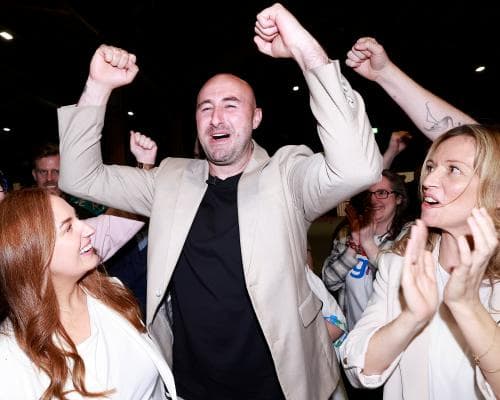
Introduction to the Election The recent Dublin byelection has concluded with Daniel Ennis of the Social Democrats emerging as the winner. The 63-year-old Irish gangland figure Gerry Hutch, who ran as an independent candidate, failed to secure a parliamentary seat. Hutch's campaign was marked by controversy, particularly his stance on immigration.
Election Results Hutch received 2,817 first preference votes, accounting for 11.3% of the total, which increased to 4,466 after votes from eliminated candidates were transferred. However, he trailed behind Ennis, who won 12,050 votes in the final count, followed by Sinn Féin's Janice Boylan with 7,787 votes, and the Green party's Janet Horner with 5,452 votes. The election was held on Friday, with the results announced on Saturday.
Campaign Promises and Reactions Ennis has promised to bring a sense of humanity to the Dáil and represent all constituents of the Dublin Central constituency. Hutch's defeat has been met with relief by establishment candidates, who were concerned that his notoriety and the current sour mood towards the government could lead to a surprise outcome. Nevertheless, Hutch and another anti-immigration candidate, Malachy Steenson, increased their share of the first preference vote compared to the 2024 general election.
Controversy and Extremist Views During the campaign, Hutch's extremist views were brought to the forefront, including his proposal to intern "illegal immigrants" in camps, specifically targeting individuals from Somalia. Additionally, a secret recording of former Fianna Fáil taoiseach Bertie Ahern expressed concerns about Muslims and arrivals from Africa, stating that Ireland cannot accommodate people from countries like the Congo. The current taoiseach, Micheál Martin, has distanced the party and the government from these remarks.
Broader Implications and Party Dynamics The byelection was held to fill the vacancy left by Paschal Donohoe, a finance minister with the ruling Fine Gael party. The centrist Fianna Fáil and Fine Gael coalition has increased public spending, fueled by corporate tax revenues, but rising prices and a housing shortage have led to protests and resentment. The Social Democrat victory has raised questions about Mary Lou McDonald's leadership of Sinn Féin, the main opposition party, which also failed to secure a seat in a recent Galway byelection. McDonald has stated that she feels no pressure and is confident in her party's ability to perform well in future elections.
Conclusion and Future Prospects The outcome of the Dublin byelection has significant implications for the political landscape in Ireland. As the country prepares for future elections, it remains to be seen how the various parties will navigate the complex issues of immigration, housing, and economic growth. With the Social Democrats' victory, the party is well-positioned to play a key role in shaping the country's future.