
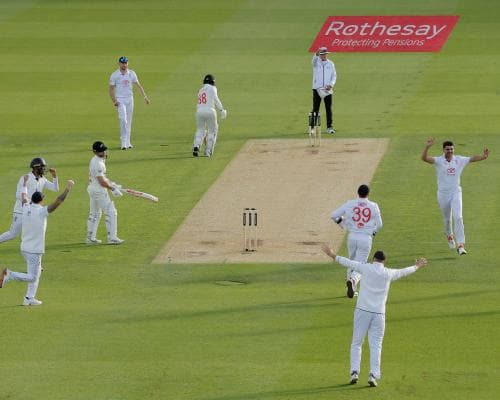
Sixteen wickets fell on the first day and a further seventeen on the second, yet the unpredictable bounce of the mischievous wicket ensured that nothing could be taken for granted. The day concluded in bright evening sunshine, with shadows lengthening as England’s lead was slowly, awkwardly reduced. Wickets continued to fall, albeit in a trickle rather than the torrent that characterised New Zealand’s first innings, and at 36 for three the target of 254 still seemed distant.
The run chase began poorly when Tom Latham edged the third ball high to Harry Brook at second slip. Kane Williamson and Devon Conway then showed resilience Conway, in particular, survived an umpire’s decision and they held on until the final minutes of the day. Williamson was dismissed lbw by Josh Tongue and night‑watchman Will O’Rourke was bowled by Gus Atkinson. In the end, only the stumps were able to stem the flow of dismissals.
Only once in a Test match in England have the first two innings been completed more quickly, and that occurred 119 years ago. In a rain‑interrupted day and less than an hour of the following day, twenty wickets fell at a rate of one every 20.8 deliveries, the match progressing amid a soundtrack of clattering stumps and fielding fist‑bumps. For about an hour before lunch and a similar period after, England managed a measure of calm. The situation might have been abbreviated had Rachin Ravindra not dropped Ben Duckett in the fifth over when the opener was on 12. The same fielder had earlier taken a straightforward catch off Brook on the opening day; this time the ball not only escaped his hands but failed to make contact as he stooped at mid‑wicket. Despite an excellent low grab by Glenn Phillips that dismissed Duckett for 33, the drop set the tone for New Zealand’s fielders. Just before lunch, Gay edged Henry between first and second slip, the ball passing both without movement, and shortly thereafter the ball flew off Jacob Bethell’s edge to Conway at backward point. Conway, who had also dropped Brook on Thursday, raised his hands but let the ball fall, as did O’Rourke, the bowler on both occasions, whose excellence has been under‑rewarded.
Two balls into the second session, New Zealand chose not to review when Gay was struck on the pad by Henry; moments later Mitchell Santner, visible in the dressing‑room window with his finger raised, indicated what might have happened had they reviewed. England entered lunch at 72 for one, holding a lead of 116 a potentially comfortable position made uneasy by memories of the start of their last Test series, when they took lunch on the second day in Perth at 59 for one with a lead of 99 and subsequently lost the match. They might have simply sought to preserve that calm, but the Lord’s pitch had other ideas.
The final delivery of the 26th over, bowled by Matt Henry whose efforts were again limited by back issues to Bethell appeared unremarkable, yet the ball struck the ground and remained there. It bounced with the same conviction as Ravindra’s earlier catch, skidding rebelliously under Bethell’s bat and sending the off‑stump cartwheeling. This sparked a brief, bewildering period in which the game offered chaos in a variety of flavours. From nothing, Gay, who had been quietly accumulating runs at 2.9 per six balls faced, seized 16 runs off a single Nathan Smith over, completing his first Test half‑century. He was then dismissed for 57, edging to the keeper off Smith. O’Rourke trapped Brook lbw in the next over, Smith dismissed Joe Root lbw, and then bowled an awkward Ben Stokes. England moved from 126 for two to 127 for six, the ground shifting beneath their feet as it had beneath the ball that bowled Bethell.
In a game of endless surprises, Jamie Smith and Atkinson forged the largest partnership of the match. When that partnership ended, Smith and Ollie Robinson added 29 runs for the eighth wicket, with Smith contributing three of those runs. After Smith’s dismissal, a further grubber bowled Robinson, who had scored 25 off 15 balls. Fifteen balls later Robinson was out, completing England’s innings. Nathan Smith, who would ultimately claim six wickets, had taken only four before the end. New Zealand began the day by adding 52 runs to their overnight total of 66 for six, most of those runs coming during a genuinely bizarre spell in which England, after quickly removing Smith and the dangerous Phillips, decided to ask Robinson to bowl 78 mph bouncers at a tail‑ender whose preferred shot is the pull. This allowed Kyle to score 38 off 29 balls, including three sixes.