
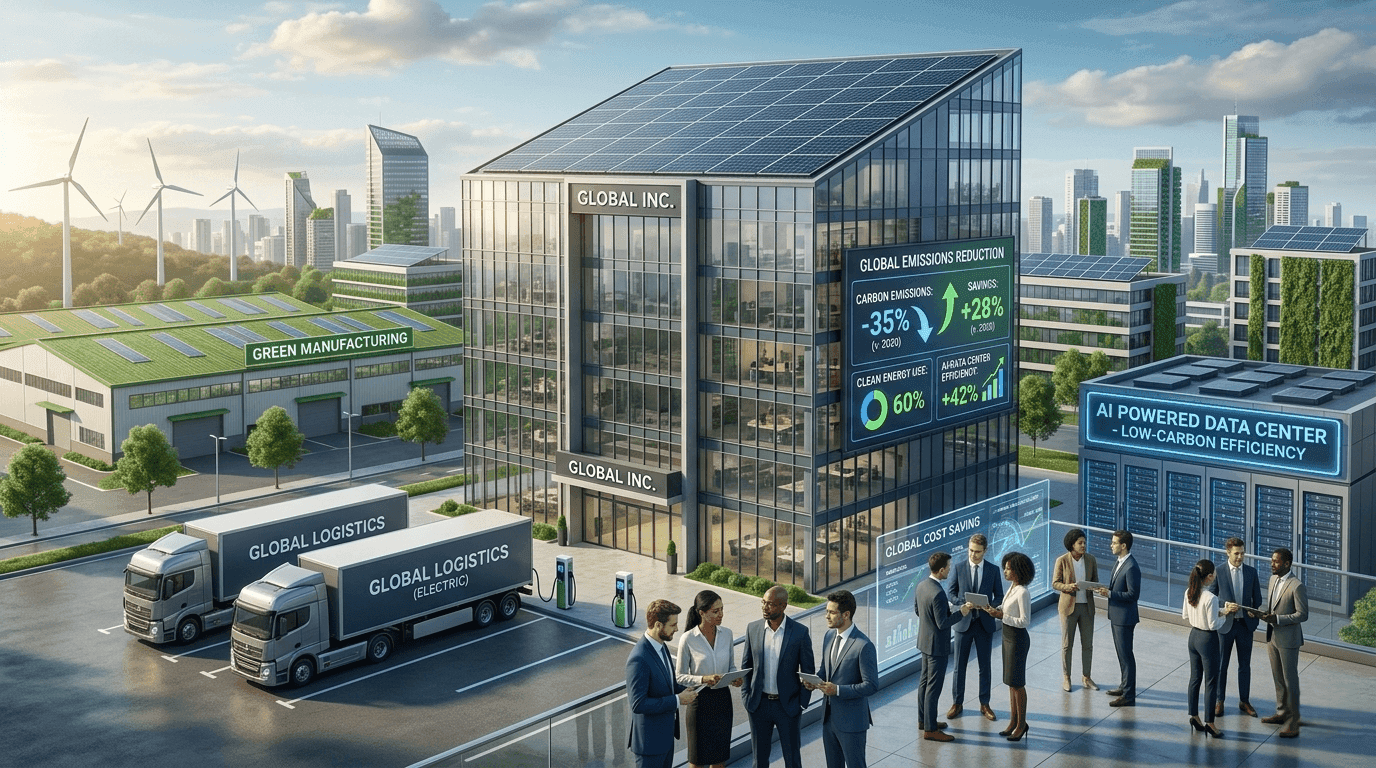
Companies Are Saving Millions by Going Green
What if reducing carbon emissions could actually make a business richer?
For years many companies believed sustainability was expensive. They assumed eco friendly operations would slow growth and reduce profits. Today the opposite is happening.
Some of the biggest businesses in the world are cutting operational costs, lowering energy bills, reducing waste, and increasing efficiency all while shrinking their carbon footprint.
This is no longer about public relations or marketing campaigns. It is now a serious business strategy that saves money and improves long term growth.
Here are 7 real companies that proved sustainability and profitability can work together.
Table of Contents
Walmart and Smarter Logistics
Interface and Manufacturing Waste Reduction
Google and Energy Efficient Data Centers
Unilever and Sustainable Manufacturing
IKEA and Renewable Energy Investments
Microsoft and Cloud Efficiency
Tesla and Factory Energy Optimization
Why Sustainable Businesses Save More Money
Final Thoughts
1. Walmart and Smarter Logistics
Walmart operates one of the largest supply chains in the world. Transporting products across thousands of stores consumes enormous amounts of fuel every day.
To reduce costs Walmart redesigned its logistics system. The company improved truck routing, increased trailer capacity, and invested heavily in fuel efficient transportation technologies.
Walmart also expanded renewable energy usage across stores and distribution centers.
Results
Reduced millions of delivery miles
Lower fuel expenses
Reduced greenhouse gas emissions
Improved supply chain efficiency
The company discovered that sustainability was not slowing operations. It was making operations smarter and cheaper.
2. Interface and Manufacturing Waste Reduction
Interface is one of the most recognized flooring manufacturers in the world. Years ago the company realized huge amounts of money were being wasted during production.
Instead of continuing traditional manufacturing methods Interface redesigned its entire production process around sustainability.
The company began using recycled materials, reducing water usage, and minimizing manufacturing waste.
Results
Lower raw material costs
Reduced landfill expenses
Less energy consumption
Significant reduction in carbon emissions
Waste reduction became one of the company’s biggest sources of savings.
3. Google and Energy Efficient Data Centers
Data centers consume massive amounts of electricity. Cooling systems alone can cost millions every year.
Google used artificial intelligence and smart cooling technologies to optimize energy consumption inside its global data centers.
The company also invested heavily in renewable energy sources.
Results
Reduced cooling energy usage dramatically
Saved millions in electricity costs
Lower operational emissions
Improved infrastructure efficiency
Google proved that technology and sustainability can work together to increase profitability.
4. Unilever and Sustainable Manufacturing
Unilever produces many household products used by millions of people worldwide.
The company realized energy waste and excessive packaging were increasing operational costs.
Unilever invested in energy efficient factories, renewable electricity, water conservation systems, and packaging reduction strategies.
Results
Lower utility costs
Reduced production waste
Smaller environmental impact
Improved customer trust
Consumers increasingly support companies that take sustainability seriously.
5. IKEA and Renewable Energy Investments
IKEA made one of the boldest sustainability moves in retail by investing heavily in renewable energy.
The company installed solar panels on stores and warehouses while also investing in wind energy projects.
IKEA also upgraded lighting systems and heating technologies to reduce energy waste.
Results
Lower electricity expenses
Increased energy independence
Reduced carbon emissions
Long term operational savings
Renewable energy became both an environmental strategy and a financial advantage.
6. Microsoft and Cloud Efficiency
Microsoft operates some of the world’s largest cloud infrastructure systems.
Instead of simply expanding operations the company focused on making data centers more energy efficient.
Microsoft introduced renewable powered infrastructure, optimized server utilization, and implemented intelligent cooling systems.
Results
Lower infrastructure costs
Reduced electricity consumption
Progress toward carbon negative goals
Improved operational scalability
Efficiency became one of the company’s strongest competitive advantages.
7. Tesla and Factory Energy Optimization
Tesla designed many of its Gigafactories around renewable energy and energy efficient manufacturing systems.
The company integrated battery storage, solar energy, and advanced automation technologies into factory operations.
Results
Reduced long term energy costs
Lower manufacturing emissions
Increased production efficiency
Better scalability for future growth
Tesla demonstrated how sustainability can be built directly into industrial operations.
Why Sustainable Businesses Save More Money
The companies above operate in completely different industries, yet they achieved similar results through smart sustainability strategies.
Here are the common patterns:
Energy Efficiency
Reducing unnecessary energy consumption lowers utility bills immediately.
Waste Reduction
Less waste means lower disposal costs and better resource management.
Smarter Logistics
Efficient transportation reduces fuel expenses and improves delivery performance.
Renewable Energy
Solar and wind energy reduce dependence on expensive traditional energy sources.
Automation and AI
Technology helps businesses identify inefficiencies and optimize operations faster.
Stronger Brand Reputation
Consumers increasingly support businesses that care about environmental responsibility.
Sustainability Is Now a Competitive Advantage
The idea that businesses must choose between profits and sustainability is outdated.
Modern companies are discovering that reducing carbon emissions often improves operational efficiency, lowers expenses, and strengthens long term growth.
Businesses that ignore sustainability may eventually face higher operational costs, stricter regulations, and weaker customer trust.
The smartest companies are already adapting.
The biggest lesson is simple.
Going green is no longer just good for the planet.
It is also good for business.
Final Thoughts
The future belongs to companies that can operate efficiently while reducing environmental impact.
The businesses leading this transformation are not sacrificing profits. They are increasing them through smarter systems, cleaner energy, and better resource management.
Sustainability is quickly becoming one of the most powerful business strategies in the modern economy.