
Two years ago, I could not climb a single flight of stairs without stopping to catch my breath at the top.
I want you to sit with that image for a moment. Not because I am proud of it, but because I know there are people reading this right now who understand exactly what that feels like. The embarrassment of it. The quiet, grinding exhaustion of carrying a body that feels like it is working against you. The way you smile in photos while secretly wishing you could disappear from them.
That was me. At my heaviest, I weighed 98 kilograms. I am 5 foot 7. I had tried every popular diet at least once. I had gym memberships that I used for exactly three weeks before guilt and inconvenience wore me down. I had downloaded apps, bought equipment that collected dust under my bed, and read enough weight loss content to fill a library.
Nothing worked. Not because the information was wrong, but because none of it was built for the life I was actually living.
What I am about to share is not a miracle. It is not a secret the fitness industry is hiding from you. It is the honest account of what actually changed for me over 18 months, the specific habits that replaced years of failed attempts, and why I believe this approach can work for almost anyone who has felt like weight loss was simply not meant for them.
I lost 25 kilograms. I still do not have a gym membership. I have never once followed a strict diet plan. And I have kept the weight off for over a year now.
Here is the real story.
First, I Had to Understand Why Everything Else Had Failed
The diets failed because they were designed to have an ending. You go on a diet. Then you go off it. The moment a plan has an off-ramp built in, your brain is already planning its exit from day one.
Every strict diet I followed created the same exhausting cycle. Restriction breeds obsession. Obsession leads to a breaking point. The breaking point triggers guilt. Guilt leads to overconsumption. And overconsumption sends you right back to where you started, except now you also feel like a failure.
The gym memberships failed because I hated going. Not because I am lazy, but because driving to a gym, changing, exercising around strangers, driving home, and showering added almost ninety minutes to any workout I wanted to do. On a full workday, those ninety minutes were genuinely not available to me without sacrificing sleep or family time. So I skipped it. Then I felt guilty. Then I stopped going entirely.
The turning point came when I stopped asking "how do I lose weight" and started asking a completely different question. I started asking: "What is the smallest possible change I can sustain forever?"
That one shift changed everything.
The First Thing I Changed: I Started Walking Every Single Day
I know. You have heard this before. Bear with me, because the way I approached walking was different from any advice I had ever been given.
I did not set a step goal. I did not track my pace. I did not buy special walking shoes right away or try to build up to 10,000 steps immediately. I simply decided that every morning, before I looked at my phone or opened my laptop, I would walk outside for at least 15 minutes.
That was the only rule. Fifteen minutes. Outside. Every day.
What happened over the following weeks surprised me completely. Some days I walked for 15 minutes and came back inside. But most days, once I was already outside and moving, I kept going. Twenty minutes became thirty. Thirty became forty-five. Not because I forced myself, but because movement, when it is gentle and pressure-free, feels good.
Within three months, I was walking an average of 7,000 to 9,000 steps a day without thinking about it. I was not training. I was just walking because it had become as automatic as brushing my teeth.
The weight started moving. Slowly at first, but it moved.
The Second Change: I Stopped Eating Less and Started Eating Differently
I want to be careful here because this is the part most weight loss content gets dangerously wrong.
I never counted a single calorie. I never weighed my food. I never gave up carbohydrates, sugar, or any other food group permanently. What I did was make a series of very small, very sustainable swaps over several months.
The first swap was water. I realized I was drinking almost no plain water throughout the day, replacing it with sweet tea, juice, and fizzy drinks. I did not eliminate these drinks. I just added two large glasses of water before every meal. That single habit reduced my overall daily consumption in a way that felt effortless because I was never hungry. I was just more hydrated.
The second swap was vegetables before the main meal. At every lunch and dinner, I started eating a portion of vegetables or a small salad before the rest of my food. Not instead of it. Before it. This consistently meant I ate a smaller quantity of everything else without any deliberate restriction because my body was already responding to the volume.
The third swap was slowing down. I had always eaten fast, the kind of fast that means you are already reaching for seconds before your body has had a chance to signal that it is full. I started putting my fork or spoon down between each bite. I started chewing more. Meals that used to take eight minutes now took twenty. This one change alone had a visible impact on how much food I naturally consumed.
Over time I added more vegetables to meals, reduced ultra-processed snacks gradually rather than eliminating them cold turkey, and started cooking at home more frequently. None of these were hard rules. They were gentle, consistent shifts that compounded over months.
The Third Change: I Fixed My Sleep
Nobody talks about sleep in weight loss conversations and it is one of the most significant factors of all. Poor sleep drives up the hormones that increase hunger and drives down the hormones that signal fullness. It also drains the willpower and mental energy you need to make good choices throughout the day.
At my heaviest, I was sleeping five to six hours most nights. I treated sleep like a budget I could cut from whenever life got busy.
I started prioritizing seven to eight hours as non-negotiable. I set a consistent bedtime and kept it even on weekends. I stopped using my phone in bed. I made my room cooler and darker.
Within two weeks of consistently better sleep, I noticed I was snacking far less in the evenings, craving sugar significantly less in the afternoons, and making better food choices without any extra effort. The connection between sleep and appetite regulation is not a theory. It is one of the most robust findings in nutritional science, and I felt it directly.
The Fourth Change: I Found Movement I Actually Enjoyed
At around the four-month mark, walking was no longer the only movement in my life. But the key was that I only added activities I genuinely liked.
I started riding a bicycle on weekends, not for fitness, but because it made me feel free in a way I had forgotten about since childhood. I started following along to short bodyweight exercise videos at home on evenings when I felt like it. I joined a casual social football group that met once a week. None of these were structured training programmes. They were just things I did because they felt good.
This is the truth that the fitness industry profits enormously from hiding: you do not need a gym. You need to move your body in ways that do not make you miserable. The specific activity matters far less than the fact that you will actually show up and do it consistently for years, not weeks.
The Fifth Change: I Addressed the Emotional Side Honestly
I am not going to skip over this because it was possibly the most important shift of all.
I was an emotional eater. Not occasionally, but systematically. Stress, boredom, loneliness, and even happiness were all triggers that sent me to the kitchen or the pantry for something that was never really about food. I was not hungry. I was looking for comfort, stimulation, or a brief escape.
Recognizing this pattern without judging myself for it was genuinely difficult. I started keeping a simple journal, not a food diary, but an emotion diary. When I felt the urge to eat outside of genuine hunger, I would write down what I was feeling at that moment. Over time, patterns became visible. Certain times of day, certain moods, certain situations were consistently linked to unconscious eating.
Awareness alone reduced the behaviour significantly. And when awareness was not enough, I found replacement habits that addressed the underlying feeling more directly. A short walk when anxious. A phone call to a friend when lonely. Five minutes of quiet breathing when overwhelmed.
I still eat for comfort sometimes. I think most humans do. But it is now a choice I make consciously rather than a pattern I fall into without knowing.
The Results and What They Actually Mean
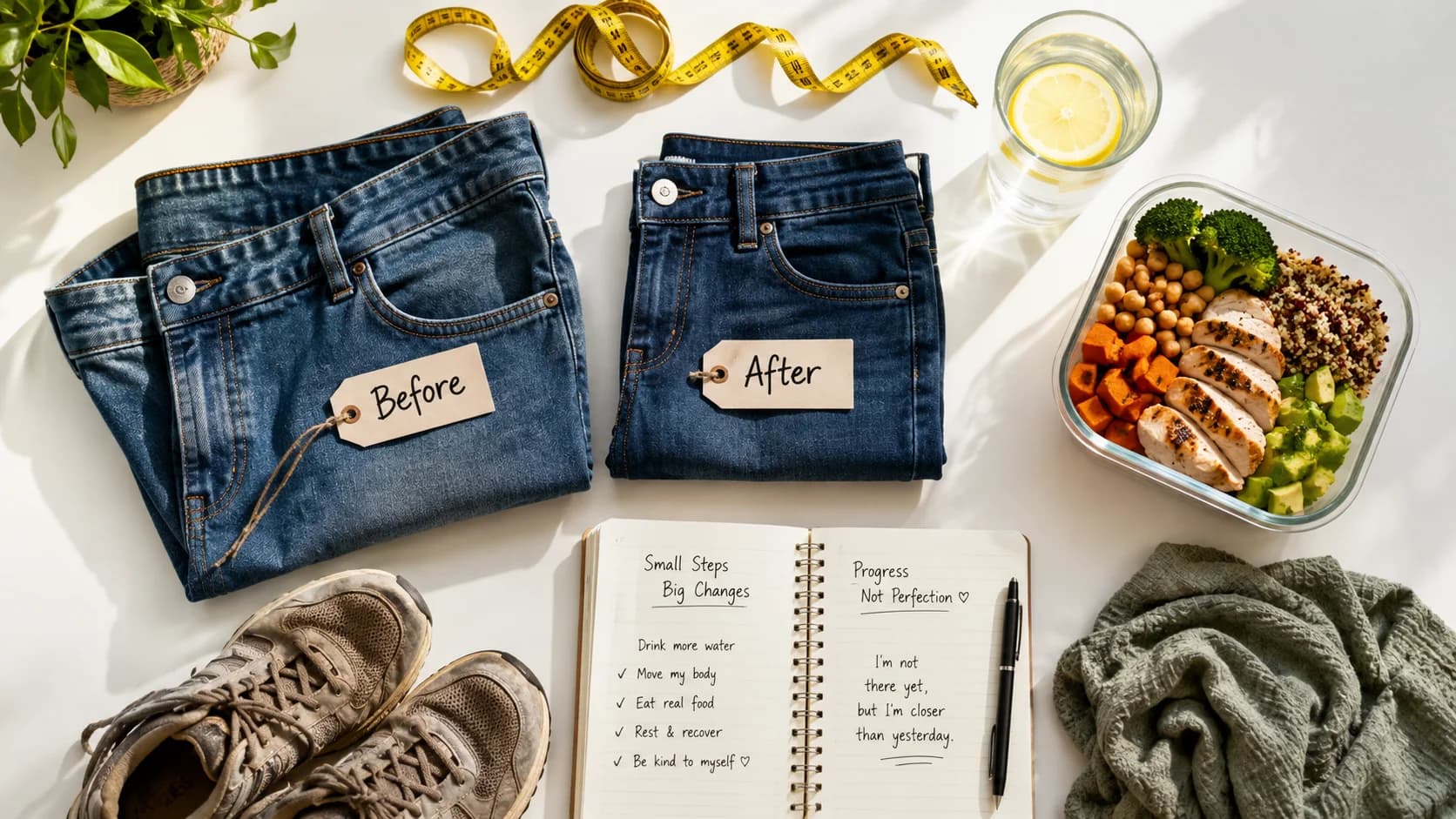
Over 18 months, I lost 25 kilograms. My resting heart rate dropped from 82 to 61 beats per minute. I sleep better than I have in a decade. I no longer get breathless on stairs. I fit into clothes I had not worn in six years. My energy levels in the afternoon are higher than they were at 25.
But here is what I want to say with as much clarity as I can: the number on the scale was never the real goal. It was a measurement of a bigger change. What I actually gained was a sustainable relationship with my own body, a genuine enjoyment of movement, and freedom from the exhausting cycle of dieting and guilt that had defined most of my adult life.
What I Want You to Take From This
If you are reading this looking for a shortcut, I cannot give you one. But if you are reading this because you are exhausted from approaches that have never worked long term, I want you to hear this.
You do not need a gym. You do not need to suffer through meals you hate. You do not need a 12-week transformation plan. You need a handful of small, honest habits that fit your actual life and that you can sustain without willpower or sacrifice.
Start with one. Just one. Walk for 15 minutes tomorrow morning before you open your phone. Do that for a week. Then add the next small thing.
The body you want to live in is built one sustainable choice at a time. Not one brutal week at a time.
Progress that lasts is progress that fits into real life. Start small. Stay consistent. Trust the compound effect of tiny habits over time.