
Table of Contents
What Remote Burnout Actually Looks Like
Why Remote Work Makes Burnout Different
7 Actionable Strategies to Beat Burnout
A Sample Anti‑Burnout Daily Routine
When to Seek Professional Help
FAQ: Quick Answers
What Remote Burnout Actually Looks Like
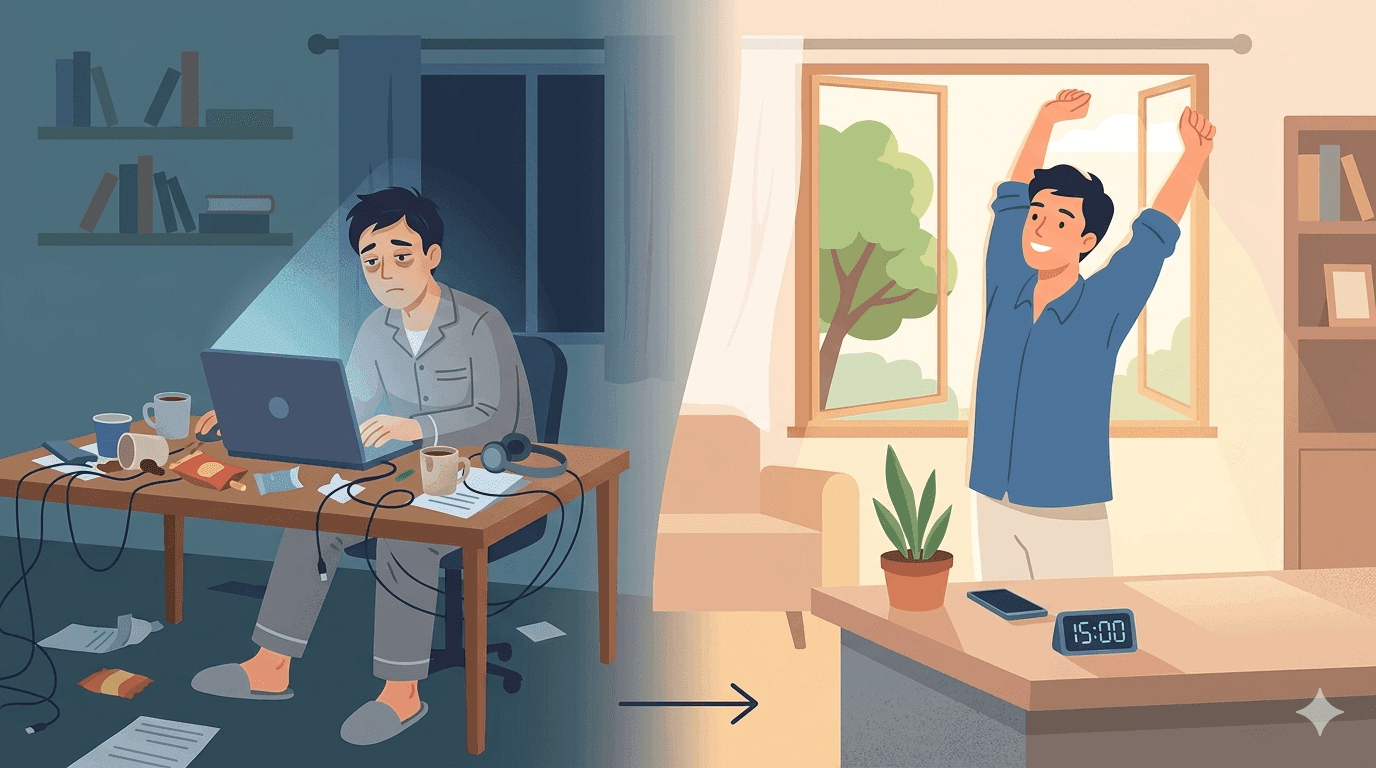
You wake up tired. You stare at your laptop. You answer emails in your bed. You join Zoom calls on mute while scrolling your phone.
That’s not just a “bad day.” That’s remote burnout.
Burnout isn’t about working long hours. It’s about feeling emotionally drained, cynical about your job, and ineffective – even when you’re technically “working.”
Common signs:
You dread opening your laptop.
You feel guilty when you step away from your desk.
You work late because “you’re already home.”
You’ve stopped caring about your performance.
You snap at family or roommates over small things.
If any of that sounds familiar, keep reading.
Why Remote Work Makes Burnout Different
Office workers commute home. They close a physical door. They have water cooler moments that reset their mood.
Remote workers? Your office is your bedroom. Your commute is rolling out of bed. Your breaks are laundry or dishes. There’s no clear line between “work” and “life.”
That blurry line is the root of remote burnout.
Three unique triggers:
Always‑on culture: Slack messages at 10 PM feel normal.
Isolation: No casual human contact to recharge you.
Invisible overwork: No one sees you skipping lunch or staying late.
The good news? Burnout is preventable and reversible. Here’s exactly how.
7 Actionable Strategies to Beat Burnout
1. Create a Hard Stop to Your Workday
You need a closing ritual. Not just “I’ll stop when I’m done.”
Do this: Set an alarm for 5 PM (or your chosen end time). When it rings, close all tabs. Shut down your laptop. Say out loud: “Work is done.” Then physically move to another room.
Why it works: Your brain needs a cue. Without it, you’ll answer “just one more email” until 8 PM.
2. Build a Fake Commute (Seriously)
You don’t have to drive. But you need a transition ritual between work and home.
Try this: After shutting down, walk around the block for 10 minutes. Or do a 5‑minute stretch. Or listen to one song while staring out the window.
Why it works: It tricks your brain into switching modes. You stop carrying work stress into your evening.
3. Use the 52‑17 Rule
Productivity science says: 52 minutes of focused work, then 17 minutes of complete break.
Do this: Set a timer. Work hard for 52 minutes. Then step away – no scrolling work email, no thinking about tasks. Walk, stretch, make tea, pet your dog.
Why it works: Short, deliberate breaks prevent mental exhaustion. You’ll actually get more done.
4. Separate Your Work Zone (Even in a Small Space)
You don’t need a home office. You need one spot that’s only for work.
Try this: If you have a desk, never eat or watch Netflix there. If you only have a kitchen table, use a specific chair for work and a different chair for meals. Or use a colored lamp – work light vs. home light.
Why it works: Spatial boundaries become mental boundaries. Your brain learns: “This chair = focus. That sofa = rest.”
5. Schedule “Do Nothing” Breaks
Most remote workers fill every break with chores or social media. That’s not rest. That’s more work.
Do this: Block two 15‑minute slots per day labeled “Nothing.” Sit still. Stare out the window. Breathe. No phone, no tasks.
Why it works: True rest resets your nervous system. Chores and scrolling don’t.
6. Have at Least One Real Human Interaction Daily
Remote work isolates you. Isolation accelerates burnout.
Try this: Every workday, have at least one non‑work conversation – in person or by voice. Call a friend during lunch. Wave to a neighbor. Join a coworking space once a week.
Why it works: Humans are social animals. Your brain needs micro‑connections to regulate stress.
7. Track Your “Energy Vampires”
Not all tasks drain you equally. Find yours.
Do this: For one week, rate every task from 1 to 10 (how drained you feel after). Spot the 8‑10 tasks. Then:
Delegate them if possible.
Batch them into one short block.
Do them when your energy is highest (morning for most).
Why it works: Burnout comes from repeated exposure to draining tasks without recovery. Batching and delegating cut the poison.
A Sample Anti‑Burnout Daily Routine
Morning (7:00 AM – 9:00 AM)
Wake up, shower, dress like you’re going to an office (no pajamas).
Eat breakfast away from your desk.
Take a 5‑minute walk or stretch before logging in.
Work Block 1 (9:00 AM – 11:00 AM)
52 minutes work / 17 minutes break (do nothing or walk).
No email checking during focus time.
Lunch (12:00 PM – 1:00 PM)
Eat away from your screen.
Call a friend or family member for 10 minutes.
Work Block 2 (1:00 PM – 3:00 PM)
Another 52/17 cycle.
Afternoon break: step outside for 5 minutes of sunlight.
Wrap‑Up (4:30 PM – 5:00 PM)
Write tomorrow’s top 3 priorities.
Close all tabs, shut down laptop.
Do your 10‑minute “fake commute” (walk, stretch, or music).
Evening (5:00 PM onward)
No work apps on your phone.
One hour of screen‑free time before bed.
When to Seek Professional Help
Burnout can become depression or anxiety. If you experience any of these for more than two weeks, talk to a therapist or doctor:
You feel hopeless about work or life.
You have physical symptoms (headaches, stomach issues, insomnia).
You’ve stopped enjoying things you used to love.
You think about quitting everything – not just your job.
Where to find help: BetterHelp, Talkspace, or local mental health services in your country. Many employers offer Employee Assistance Programs (EAP) with free counseling.
FAQ – Quick Answers
Q: How long does it take to recover from burnout?
A: Mild burnout: 2‑4 weeks of consistent changes. Severe burnout: 3‑6 months, sometimes requiring reduced workload or time off.
Q: Can I manage burnout without quitting my job?
A: Yes, for most people. The strategies above work for 80% of cases. If you’ve tried them for 2 months with no improvement, then consider a job change.
Q: What’s the #1 mistake remote workers make?
A: Not having a shutdown ritual. They drift from work into evening without noticing, then wonder why they’re always tired.
Q: Is burnout only about working too much?
A: No. You can work 30 hours a week and still burn out if you feel lack of control, unfair treatment, or value mismatch with your role.
Q: Can exercise really help burnout?
A: Yes. 20 minutes of walking per day reduces burnout symptoms by 30‑40% in studies. Start small – don’t pressure yourself to run marathons.
Final Call to Action
Burnout isn’t a badge of honor. It’s not “how hard you work.” It’s a signal that something in your system is broken usually boundaries or recovery.
Your next step: Pick one strategy from this guide. Just one. Do it tomorrow. Then add another next week.
Small changes compound. Your future, non‑burned‑out self will thank you.
Now close this tab, stand up, and take a 2‑minute walk. You’ve earned it.
About the author: Brainwave O. Salau helps remote workers build sustainable careers. Follow our Facebook page for weekly tips on work‑life balance and productivity.