
Background
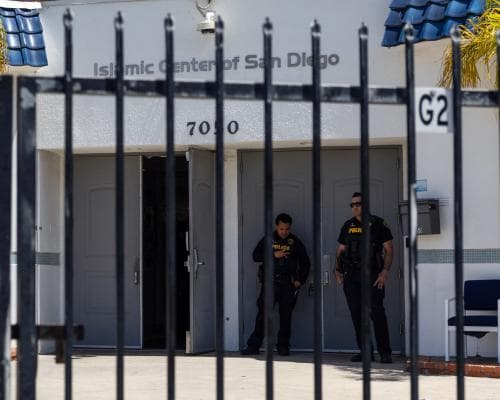
On Monday, two teenage gunmen entered the Islamic Center of San Diego, killing three individuals before taking their own lives in a vehicle. The victims included a security guard who engaged the attackers and two mosque employees who diverted the shooters from the sanctuary. The incident halted a scheduled gathering of approximately 140 schoolchildren, who were safely evacuated during a lockdown.
Prior Law‑Enforcement Monitoring
The older shooter, Caleb Vazquez, had been identified by authorities as a potential threat before the attack. Local officials seized firearms belonging to his father after reports that Vazquez idolized mass shooters and Nazi ideology. The FBI also placed Vazquez on a watch list earlier in the year. A police officer documented “suspicious behavior” linked to extremist views, prompting a protective order and an involuntary psychiatric hold for Vazquez.
Online Radicalization
Both attackers met through internet platforms where they exchanged white supremacist and pro‑Nazi rhetoric. Their communications called for the extermination of Muslims and expressed hostility toward Jewish people, LGBTQ+ individuals, Black people, and women. Materials attributed to Vazquez described an accelerationist worldview that advocated extreme violence.
Sequence of the Attack
The shooters arrived at the mosque and attempted to force entry. A security guard opened fire, forcing the assailants outside. During the exchange, the guard initiated a lockdown that cleared the building’s interior. The attackers entered the lobby, fatally shot the guard, and then moved to the parking area where they killed two additional men who had drawn them away from the sanctuary. After the shootings, both perpetrators died from self‑inflicted gunshot wounds in their vehicle.
Weapon Seizure and Investigation
Vazquez’s father owned 26 firearms, including pistols, rifles, and shotguns. Following the earlier protective order, the father voluntarily stored the weapons in a secure facility and later surrendered them to authorities. Police later recovered at least 30 firearms, ammunition, and a crossbow from two residences connected to the shooters. It remains unclear whether the weapons used in the attack originated from the Vazquez household, as the second shooter, Cain Clark, also grew up in a gun‑rich environment.
Family Statement
Representatives for the Vazquez family issued an apology, attributing their son’s actions to his autism diagnosis and exposure to extremist content online. The family affirmed its opposition to the ideology that motivated the tragedy and expressed condolences to the victims’ families.
Community Response
The mosque’s imam noted that the congregation has previously received hate mail and threatening messages. In the aftermath of the shooting, the local Muslim community began a process of healing and reaffirmed its role as a neighbor to the broader city.