
The Political Landscape of the Runoff
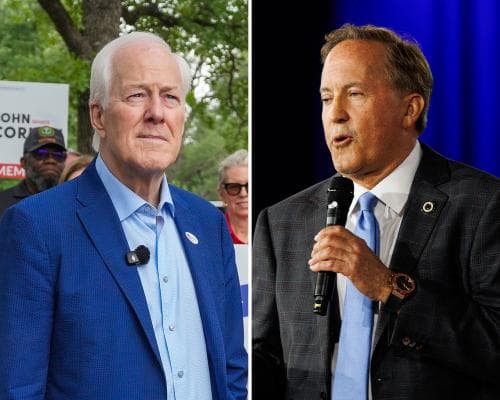
The United States Senate runoff in Texas pits incumbent John Cornell against Attorney General Ken Paxton. Throughout the campaign, both candidates have repeatedly targeted the state’s Muslim community. Each side accuses the other of either being too lenient toward an alleged Islamic threat or of insufficiently confronting Muslim institutions. Shehla Faizi, a Green Party candidate for state comptroller, describes the tactic as a “boogeyman” strategy used by the GOP to generate fear and secure votes. Interviews with experts and advocates reveal that the intensity of anti‑Islam rhetoric this year has reached an unprecedented level, a conclusion supported by recent data.
Campaign Advertisements and Counterclaims
Paxton and allied groups have aired advertisements that allege Cornell supports “Muslim mass immigration” and holds “a special place in his heart for radical Islam.” In response, Cornell highlights his record of confronting radical Islamic extremism and has introduced legislation intended to stop the spread of Sharia law in the United States. Although the runoff will conclude with the May 26 election, Texas Muslims warn that Republican leaders are intensifying anti‑Muslim bigotry that already underlies many racist incidents in the state. Sameeha Rizvi, a civic‑engagement coordinator for the Council on American‑Islamic Relations, argues that political rhetoric that spreads hate and misinformation will only increase division, hate crimes, and attacks such as those witnessed in San Diego. Neither Cornell nor Paxton answered questions for this report.
The “Sharia Law” Controversy
For much of the past year both candidates have criticized a real‑estate development proposed by leaders of the East Plano Islamic Center. Cornell joined other Republican officials in raising concerns that the project might involve discriminatory practices or the influence of Sharia law, claims the developers denied. Cornell successfully urged the U.S. Department of Justice to open a civil‑rights investigation, which was later closed without formal action. Paxton continued the effort at the state level, filing multiple lawsuits against the development and its affiliates. Dr. Matthew Wilson, a political‑science professor at Southern Methodist University, notes that the notion of Texas courts enforcing Sharia law is highly implausible, yet the theme recurs in campaign discourse. Wilson points out that Muslims comprise less than two percent of Texas’s population, but factors such as the ongoing conflict with Iran make anti‑Islam messages resonate with Republican voters.
National Influences on Texas Politics
Both Wilson and Dr. Brandon Rottinghaus of the University of Houston observe that Republican primaries now often hinge on alignment with former President Donald Trump. Trump’s “Muslim ban” was a central element of his 2016 campaign and his first term, framed as a national‑security measure. After the October 7 attacks by Hamas, Trump renewed calls for restricting immigration from Muslim‑majority countries. Pew Research conducted during Trump’s first term found that seventy percent of Republicans believed Islam was more likely than other religions to encourage violence. A later University of Maryland study documented a sharp decline in favorable attitudes toward Muslims between 2016 and 2024, with Muslim Americans rated as the least likely to strengthen American society among white, Christian, and Jewish respondents. The Institute for Social Policy & Understanding’s 2025 Islamophobia Index identified a vote for Trump as one of the strongest predictors of Islamophobic attitudes. Rottinghaus describes the runoff as a test of how far candidates will go to mobilize the most fervent MAGA supporters. Both Cornell and Paxton sought Trump’s endorsement after neither secured a majority in the primary. Trump ultimately endorsed Paxton a week before the runoff, praising him as a “true MAGA Warrior” and criticizing Cornell for his delayed support of Trump’s 2024 comeback.
Potential Political Consequences
Wilson and Rottinghaus suggest that Cornell’s focus on “Sharia law” may alienate moderate voters and inadvertently boost Paxton’s appeal among the most conservative electorate. Rottinghaus argues that emphasizing only the most conservative issues narrows the electorate and primarily energizes voters who are already inclined to support Paxton.
Islamophobia Beyond the Senate Race
Anti‑Islam rhetoric is not confined to the Cornell‑Paxton contest. In Florida, Representative Randy Fine recently posted a tweet comparing a choice between dogs and Muslims. Representative Andy Ogles of Tennessee declared that Muslims do not belong in American society. Senator Tommy Tuberville of Alabama has labeled Islam a cult and claimed that Islamists aim to conquer rather than assimilate. In Texas, two members of Congress founded a “Sharia‑free America” caucus, and the race for Texas Railroad Commissioner has featured candidates who publicly questioned whether Jews or Muslims pose a greater threat to the nation. Although some Republicans, including Cornell, condemned the most extreme statements, candidates such as Bo French have continued to receive endorsements from other GOP officials while asserting that Islam threatens Texans’ way of life.
Governor Greg Abbott has taken additional steps that target Muslim organizations. He designated the Council on American‑Islamic Relations as a foreign terrorist organization under state law, a classification the group is contesting in court. Abbott also sent letters to sheriffs and district attorneys in two North Texas counties urging collaboration with Attorney General Paxton to investigate alleged illegal enforcement of Sharia law. A spokesperson for the governor framed the actions as aimed at radical groups that support terrorism and seek to impose Sharia law on Texans.
Intersection of Anti‑Semitism and Islamophobia
Interviewees, including scholars, aspiring politicians, and Texas students, note that the Republican Party’s longstanding alignment with Israel contributes to rising anti‑Jewish and anti‑Muslim sentiment, especially amid the conflict in Gaza, which many human‑rights organizations describe as a genocide against Palestinians. Texas Muslims report that criticism of Israeli policy is frequently conflated with antisemitism, which then fuels backlash against Islam and Muslims. Rizvi emphasizes that equating criticism of the Israeli government with hatred toward the Jewish community is inaccurate and harmful. Sarah Khalid, a member of Students for Justice in Palestine at the University of Texas at Dallas, describes anti‑Muslim rhetoric and the suppression of Palestinian organizing as products of the same political system. Her organization is suing the university for alleged violations of constitutional rights, including surveillance, excessive force, retaliatory discipline, and wrongful arrests during protests.
Community Resilience and Advocacy
Despite the hostile environment, Texas Muslims are organizing to counter bigotry. Shehla Faizi, who launched a podcast titled “I’m a Muslim (And That’s Okay!)” in 2020, shifted from discussion to activism after recognizing the need for more decisive action. She is now running for office to resist authoritarian overreach and represent ordinary citizens. Rizvi reminds listeners that Muslims have been part of Texas and the United States since the earliest days of the nation, noting that figures such as Thomas Jefferson studied Islam. She stresses that Muslims are neighbors, not enemies, and have long contributed to the fabric of American society.
This article presents a comprehensive overview of how anti‑Islam sentiment has shaped the Texas Senate runoff, the legal battles surrounding alleged Sharia influence, and the broader national and community dynamics at play.