
United States Action in the Hormozgan Region
The Iranian Foreign Ministry announced that the United States violated the cease‑fire that has been in place around the Strait of Hormuz. The ministry said Iran will respond and will not hesitate to defend its sovereignty. According to United States Central Command, American forces carried out strikes in southern Iran on Monday. Targets included vessels that were attempting to lay mines and missile launch sites. The United States described the operation as a defensive measure to protect its personnel.
In a statement, the Iranian ministry held the United States responsible for all consequences arising from what it called aggressive and unjustified actions. Iran’s Revolutionary Guard Corps later reported that its air‑defence units shot down a United States MQ‑9 drone and fired at a fighter jet that entered Iranian airspace.
Israeli Operations in Lebanon
Israeli forces conducted a series of overnight strikes in southern and eastern Lebanon. Photographs released after the attacks showed Lebanese civil‑defence crews working amid rubble in the town of al‑Hosh near Tyre. Prime Minister Benjamin Netanyahu said he had ordered an intensification of the campaign to crush Hezbollah, accusing the militia of targeting Israeli troops with drone attacks.
The Israeli military warned residents of the southern Lebanese town of Nabatieh to evacuate ahead of possible air strikes. An earlier strike in the Bekaa Valley killed twelve people. The heightened activity comes three days before Lebanese and Israeli military delegations are scheduled to meet in Washington for direct talks.
Negotiations Over Iranian Frozen Assets
A major obstacle in the ongoing negotiations to end the United States‑Israel conflict with Iran concerns the release of Iranian funds that have been frozen abroad. Approximately twenty‑four billion dollars in assets are slated for release under a memorandum of understanding that is being discussed with the United States. Iran’s chief negotiator, Mohammad Baqr Qalibaf, travelled to Qatar to reach an agreement on a mechanism for implementing this provision. The talks also addressed the future of the Strait of Hormuz and Iran’s stockpile of highly enriched uranium.
Regional and International Reactions
Beijing called on Iran and the United States to honour the cease‑fire and to resolve disputes through peaceful means. A Chinese foreign‑ministry spokesperson urged an early restoration of peace in the region.
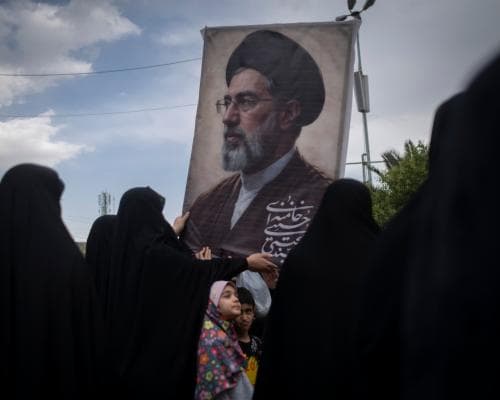
Iran’s Supreme Leader, Mojtaba Khamenei, posted on his Telegram channel that Gulf states will no longer provide a shield for United States bases and that the United States will lose its safe haven in the area. His remarks followed the overnight United States attacks on Iranian targets.
Market Impact
Brent crude oil rose three percent after the United States strikes in Iran, reflecting uncertainty about the timing of a peace settlement and the reopening of shipping lanes through the Strait of Hormuz. Analysts noted that even if a deal is reached, the reopening of the strait is likely to be gradual, meaning the current tight supply outlook could persist for several months.
In Asian markets, traders displayed mixed reactions. United States crude oil fell more than four percent to ninety‑one point five nine dollars a barrel, while Brent crude gained one point five seven dollars to ninety‑four point ninety nine dollars a barrel after a previous decline of nearly five dollars.
Domestic Developments in Iran
Iran executed a man identified as Gholamreza Khani Shekarab for alleged espionage and cooperation with Israeli intelligence. Human‑rights organisations reported that at least ten individuals have been executed for espionage charges in 2026, with eight accused of working for Israel or the United States.
Religious Observance Amid Conflict
Despite extreme desert temperatures and the ongoing regional conflict, more than one point five million Muslims performed the rites of Hajj on Mount Arafat. Over thirty thousand Iranians participated, a figure reduced from the original expectation of eighty‑six thousand because of the wartime situation. Saudi officials noted that the number of international pilgrims this year exceeded that of the previous year.
United States Policy on Jerusalem
According to a report by Middle East Eye, United States officials are working on a plan to remove Jordan’s historic custodianship of the al‑Aqsa Mosque complex. The proposal, attributed to senior advisers in the Trump administration, would replace Jordanian authority with a new body that would designate the site as a multi‑faith centre. The plan has been described as an attempt to diminish the mosque’s Muslim identity and to transform the location into a tourist attraction for all three Abrahamic religions.
Trump Initiative and the Abraham Accords
Former President Donald Trump urged additional Middle Eastern nations to join the Abraham Accords, which normalise relations with Israel. He cited Saudi Arabia, Qatar, Egypt, Jordan, Turkey and Pakistan as countries that should sign on immediately. While the United Arab Emirates and Bahrain joined the accords in 2020, Saudi Arabia has indicated that any normalisation must be linked to a clear pathway for Palestinian statehood. Pakistan’s position on Israel remains unchanged, according to analysts.
Analysis of the Emerging Deal
Early in the conflict, Israeli security officials warned that Prime Minister Netanyahu risked sacrificing bipartisan support in the United States in pursuit of regime change in Iran. Nearly three months later, United States public opinion polls suggest that the most lasting impact of the war may be the erosion of a decades‑old diplomatic framework. Israel has been excluded from direct negotiations with Iran and is relying on regional allies and intelligence networks. The draft agreement being negotiated by the Trump team is expected to impose fewer restrictions on Iran’s nuclear programme than the 2015 agreement reached under President Barack Obama. Israeli leaders have criticised the emerging plan, arguing that it could accelerate Iran’s nuclear ambitions.
Outlook
The United States, Iran and Israel continue to exchange accusations of cease‑fire violations while diplomatic channels remain active in Doha and other venues. The status of the Strait of Hormuz, the release of frozen Iranian assets, and the future of the al‑Aqsa Mosque remain key points of contention. Market participants are watching the situation closely, as any escalation could further disrupt global energy supplies. The coming days are likely to determine whether a comprehensive settlement can be achieved or whether the region will face renewed hostilities.