
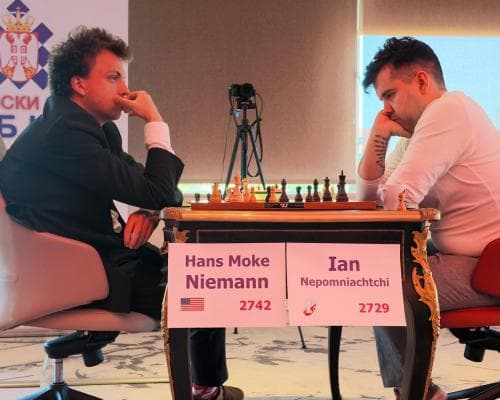
The Opening Move That Captured the World’s Attention
From the first round the board crackled with energy. Nepomniachtchi seized an early advantage in a Ruy Lopez Berlin Wall and converted it into a win that set the tone for the series. The victory sparked a wave of analysis across social media and reminded fans why the Russian grandmaster remains a force despite recent setbacks.
A Day‑to‑Day Battle Under Fast Classical Rules
The two competitors met twice each day, each game played with one hour per side plus a thirty‑second increment per move. This “fast classical” format demanded precision and stamina, pushing both players to the limits of their preparation.
Game 1 – Nepomniachtchi Takes the Lead
A well‑timed breakthrough in the Berlin Wall gave the Russian a clear edge. His calm conversion turned a complex middlegame into a decisive win.
Games 2‑7 – The Draw Marathon
Four draws emerged from the Rossolimo Sicilian, a line both players favored with the white pieces. In game 7 a critical oversight allowed Nepomniachtchi to miss a winning tactic, turning a potential match‑sealing moment into another draw.
Game 8 – Niemann’s Redemption
Hans Niemann answered with a brilliant Rossolimo victory, evening the score and leaving the audience buzzing about a possible tie‑break.
The Unsettled Aftermath
With the series tied, Niemann suggested an extra Armageddon game to settle the score. Nepomniachtchi declined, leaving the result as a historic stalemate. Their relationship remained frosty throughout; Nepomniachtchi repeatedly asked for a post‑match analysis, but Niemann refused, still harboring resentment from a previous tournament controversy in Azerbaijan.
What the Match Means for Modern Chess
A New Chapter in East‑West Rivalries – The encounter is the most significant individual clash between Russian and American players since the 1996 Karpov‑Kamsky duel and echoes the political drama of Fischer‑Spassky in 1972.
A Test of Resilience – Both grandmasters displayed the mental toughness required at the highest level, turning every half‑move into a lesson for aspiring players.
Implications for Future Championships – Nepomniachtchi’s performance reaffirms his status as a two‑time Candidates winner and a perennial world‑title challenger. Niemann’s showing signals his arrival as a serious contender on the global stage.
Parallel Stories from the Same Week
While Belgrade hosted this headline match, other tournaments added intrigue to the chess calendar.
Carlsen’s Struggles in Oslo
World No 1 Magnus Carlsen matched his worst tournament record, suffering four defeats. The Norwegian event highlighted the rising strength of younger talents such as Praggnanandhaa and Alireza Firouzja.
Women’s Chess Shifts in Oslo
Reigning women’s champion Ju Wenjun posted a modest 50 percent score, hinting at a forthcoming generational change. Young challengers Vaishali Rameshbabu and Bibisara Assaubayeva are poised to reshape the title picture before 2030.
Senior Championships in Italy
English grandmasters Danny Gormally and Keith Arkell opened the European Senior Championships with swift miniatures, demonstrating that tactical fireworks are not limited to the elite circuit.
Takeaways for Players and Fans
Preparation Over Speed – Even under fast classical conditions, deep opening knowledge proved decisive.
Psychology Matters – Managing emotions after a controversial incident can be as crucial as the moves on the board.
Never Underestimate a Draw – Six draws kept the match alive and showcased the fine balance between aggression and caution.