
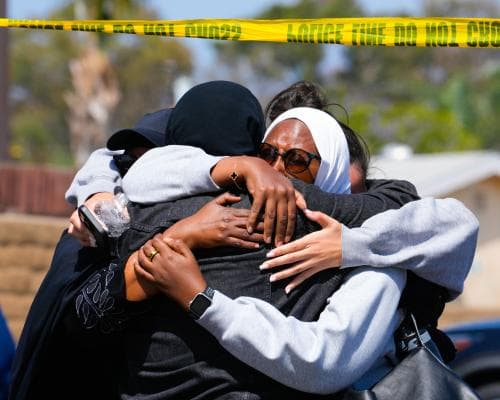
A Moment That Stopped Time
The sound of gunfire ripped through the elementary school inside the Islamic Center of San Diego. Teacher’s assistant Iman Khatex froze, locked the door, turned off the lights and crouched under a desk with a colleague. In the preschool room, toddlers pressed their backs against the walls, eyes wide, remembering the safety drills they had practiced. Outside, first‑grade children were on recess when the first shot rang out. “We are grateful we made it out alive,” Khatex said two days later, her voice trembling.
Heroes in the Line of Fire
Security guard Amin Abdullah was the first to react. He radioed the lockdown, returned fire and kept the two teenage shooters from reaching the 140 children and 20 staff members inside the school. Abdullah’s sacrifice bought the community precious seconds. He later lay on the ground in front of the mosque, a silent testament to his bravery.
Also lost were Mansour Kaziha, manager of the mosque store, and Nader Awad, a neighbor who was struck while fleeing the scene. Awad’s wife teaches kindergarten at the same school. The investigation treats the attack as a hate crime.
A Community’s Grief and Unity
At a press conference the day after, Abdullah’s daughter Hawaa stood with her siblings, tears streaming. “My dad was my role model and my best friend,” she said, recalling how he feared taking a lunch break because he never wanted to leave the center unattended.
The Islamic Center of San Diego, the largest mosque in the county, has long been a welcoming place for thousands of families from more than a dozen nationalities. Its elementary school serves children from preschool through third grade, and the campus hosts five daily prayers.
Decades of Openness in the Face of Threats
Founded in 1989, the center has weathered past attacks, including a defective bomb placed during the Gulf War. Imam Taha Hassane, who arrived from Algeria weeks before September 11, chose to open the doors wider after the 1995 Oklahoma City bombing. He began interfaith meetings, joined civic advisory boards and switched Friday sermons to English so every congregant could understand.
On the morning of the shooting, a group of non‑Muslim visitors toured the center, learning about Islam. Their presence underscored the center’s long‑standing commitment to openness.
Rising Hate After Global Conflict
The October 2023 conflict in Gaza sparked a wave of anti‑Muslim sentiment across the United States. Posters bearing hateful slogans appeared on the center’s fence, and social‑media attacks targeted Imam Hassane and his family. The Council on American‑Islamic Relations recorded more than 8,600 complaints in 2025, the highest number ever logged.
Experts note that today’s rhetoric has moved from fringe conspiracies to the halls of Congress, where some lawmakers label mosques as “forward operating bases.” The internet accelerates radicalization, allowing teenagers to exchange manifestos and turn hateful ideology into mass violence.
Calls for Real Protection
After the shooting, community leaders demanded federal security funding. Mosques in San Diego received no money in the latest Department of Homeland Security grant cycle. Advocates urged the department to brief Muslim leaders on protective measures, insisting that taxpayers deserve equal safety.
Healing Steps Forward
Two days after the attack, staff returned in pairs to collect personal items left behind. Backpacks and lunchboxes still lay on the playground. The community gathered at a nearby park for an interfaith vigil, where faith leaders stood beside Imam Hassane and elected officials to honor the fallen.
The mosque resumed its five daily prayers, though the school remains closed for the rest of the year. A fundraiser has already raised more than three million dollars for the victims. Staff members are working to return children’s belongings and to create positive memories that can help close this painful chapter.
What the Future Holds
“Children should not have to live in a world of fear,” Khatex said. The Islamic Center of San Diego continues to stand as a beacon of resilience, reminding neighbors that understanding and compassion are the strongest defenses against hate.