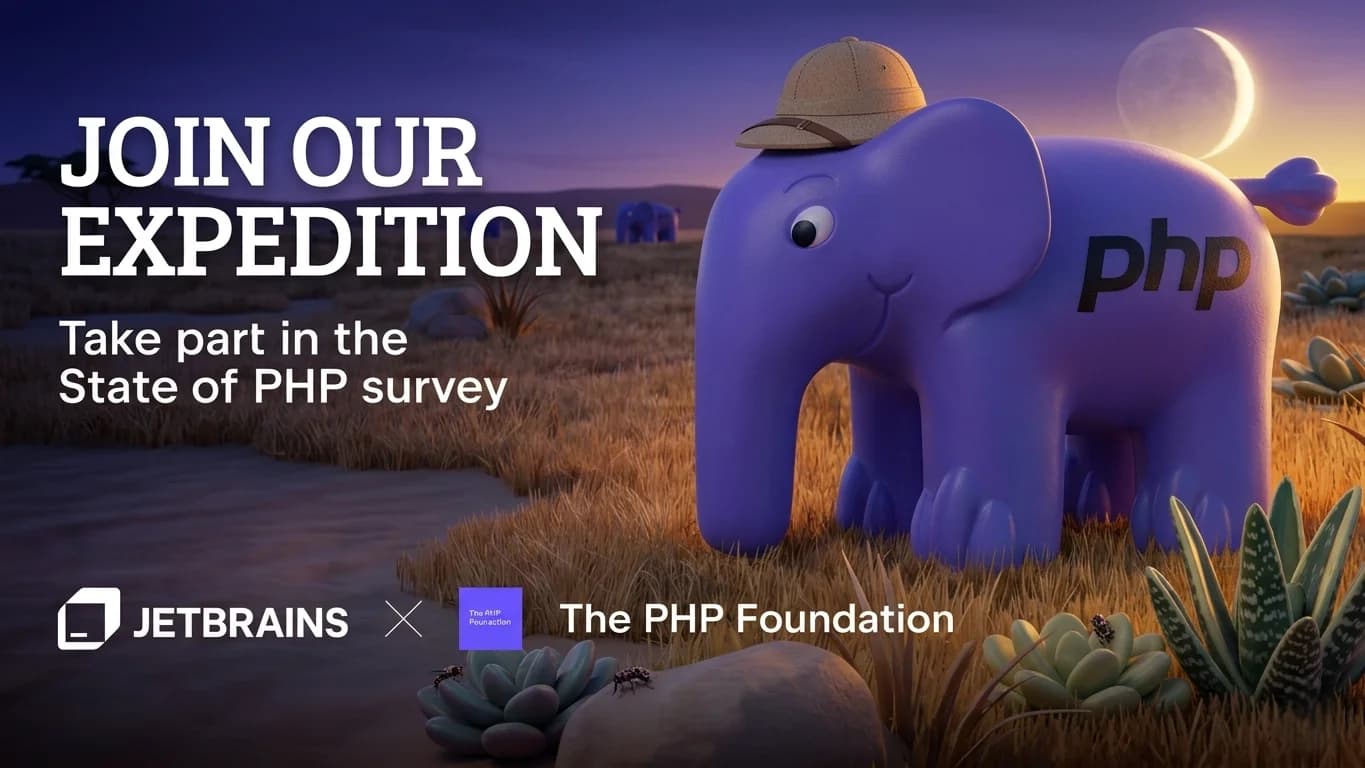
In a significant collaborative move aimed at deepening the industry’s understanding of the PHP landscape, JetBrains and The PHP Foundation have officially opened the inaugural State of PHP survey. This joint initiative is designed to capture a comprehensive, nuanced, and genuinely representative picture of how the PHP programming language is being used in 2026 and, just as importantly, who is building with it. By pooling their respective reach and credibility, the two organizations are making a deliberate effort to engage a wide cross-section of developers across all experience levels, geographic regions, development workflows, and technology stacks so that the resulting insights accurately reflect the diversity and breadth of the global PHP community.
The survey marks the first time that such a broad, community-wide data-gathering exercise has been undertaken under the shared stewardship of both a leading development tools company and the non-profit foundation that oversees the language’s evolution. Their stated ambition is to move beyond anecdotal evidence and fragmented poll results, instead establishing a robust, data-driven foundation that can inform decisions for years to come. Every PHP practitioner, whether they are a seasoned enterprise architect, a freelance WordPress developer, a Laravel enthusiast, a Symfony contributor, a maintainer of legacy systems, or a newcomer writing their very first script, is encouraged to make their experience count by participating.
What the Survey Covers: A Deep Dive into People and Practice
The questionnaire has been thoughtfully structured to shed light on both the technical and human dimensions of PHP development. By gathering detailed self-reported information, the organizers hope to build a multidimensional profile of the ecosystem. Specifically, the survey explores:
Years of experience and developer demographics: Respondents are asked about their professional journey with PHP, including how long they have been coding in the language and key demographic indicators. This data will help map the career trajectories, diversity, and geographic distribution of the PHP workforce, offering a clearer view of who is powering the web with PHP today.
Preferred frameworks and tools: The survey inquires about the frameworks (such as Laravel, Symfony, Slim, Laminas, and others), content management systems, integrated development environments, debugging utilities, testing libraries, and deployment tools that developers rely on daily. By identifying patterns of adoption, the results can guide tool authors, hosting providers, and framework maintainers in prioritizing features and support.
AI preferences and evolving usage patterns: Recognizing the transformative impact of artificial intelligence on software development, the survey includes a dedicated section on AI. It seeks to understand which AI assistants and coding tools (e.g., GitHub Copilot, JetBrains AI Assistant, ChatGPT, or others) PHP developers are embracing, how they are incorporating these technologies into their workflows, and which tasks code generation, refactoring, test writing, documentation, debugging are being augmented or automated. This segment will offer a timely snapshot of the intersection between PHP and AI-assisted development.
Challenges that developers encounter: No ecosystem is without friction. The survey invites participants to identify the most persistent obstacles they face, whether these relate to language features, performance bottlenecks, deployment complexity, interoperability with other systems, tooling gaps, or the learning curve for newcomers. Aggregated challenge data will give voice to common pain points and provide an evidence-based agenda for future improvements.
Sentiment about PHP and its future direction: Beyond technical snapshots, the survey captures the community’s mood. Questions on satisfaction, confidence in the language’s longevity, and opinions on recent and upcoming language changes are included. This sentiment analysis is invaluable for the PHP Foundation’s strategic planning and for contributors who need to gauge community appetite for new features, deprecations, or process changes.
By weaving together these themes, the survey aspires to create a holistic account not just of what PHP developers are doing, but of how they feel about their tools, their careers, and the language’s trajectory.
Why This Survey Matters: Building a Shared Reference for the Ecosystem
Both JetBrains and The PHP Foundation have articulated a clear rationale for the project: the PHP ecosystem is vast, distributed, and often silently productive, making it difficult to understand its true shape without deliberate inquiry. In its official announcement, The PHP Foundation underlined the necessity of the initiative, stating:
To support PHP effectively, we need better insight into that ecosystem.
This straightforward statement reflects the foundation’s core challenge stewarding a language that runs a huge portion of the internet requires knowing who is using it, how it is being used, and where the friction points lie. Without representative data, resource allocation, feature prioritization, and advocacy efforts risk being guided by the loudest voices rather than by the real needs of the silent majority.
JetBrains, which has extensive experience conducting developer ecosystem surveys across multiple languages, frames the collaborative effort in a similarly community-oriented way. The company describes the objective as drawing:
the most representative picture of the PHP ecosystem and the developers behind it, and share insights that will benefit the community and help shape the future direction of PHP.
The dual emphasis on representation and actionable sharing is critical. The aggregated data will not sit behind a paywall or serve only one organization’s internal roadmap. Instead, the results will be compiled into the State of PHP 2026 report, scheduled for publication later this year. Once released, the report is intended to become a shared reference point a freely accessible public good for the entire PHP world. Contributors to the language itself, maintainers of frameworks and libraries, tooling vendors, educators designing curricula, companies that hire PHP talent, and even organizations deciding on technology investments will all be able to draw on its findings. In essence, the survey provides the raw material for a more informed, transparent, and collaborative ecosystem.
Incentives and Integrity: Prizes and Safeguards
To encourage broad participation and thank developers for their time, the organizers have introduced a prize draw. Every individual who completes the survey may choose to enter a drawing for one of five prizes, each consisting of a €500 voucher (or the equivalent amount in the winner’s local currency). These vouchers are redeemable through Tremendous, a global rewards platform that supports a wide range of redemption options, from retail gift cards to prepaid digital cards and charitable donations, ensuring flexibility for winners regardless of their location.
Crucially, the initiative has been designed with data integrity in mind. The organizers have explicitly stated that automated bots, dishonest submissions, and AI agents posing as human respondents will be excluded from prize distribution. This policy is accompanied by a light-hearted but firm caution: “So don’t try it. :)” The combination of a meaningful incentive and clear integrity safeguards underscores the seriousness of the data collection effort the community’s time is valued, but the accuracy of the resulting picture is paramount.
How to Participate and What to Expect
The State of PHP survey is open immediately and will remain accessible for responses. The organizers anticipate publishing the comprehensive State of PHP 2026 report in October 2026, giving them sufficient time to clean, analyze, and contextualize the data before sharing the findings with the public.
Developers who wish to add their voice can take the survey directly at:
The questionnaire requires only a few minutes to complete, but its collective impact promises to be substantial. For those seeking additional context or official statements, the announcements from both JetBrains and The PHP Foundation provide further background and can be found on their respective websites and communication channels.
By dedicating a short amount of time today, every PHP developer regardless of their preferred frameworks, the size of their employer, or the country they work from has the opportunity to help shape the conversation, influence the priorities of language maintainers, and contribute to a clearer, more evidence-based understanding of one of the web’s most enduring technologies. The future direction of PHP will be charted not in isolation, but with the collective input of the people who write, debug, deploy, and innovate with it every day.