
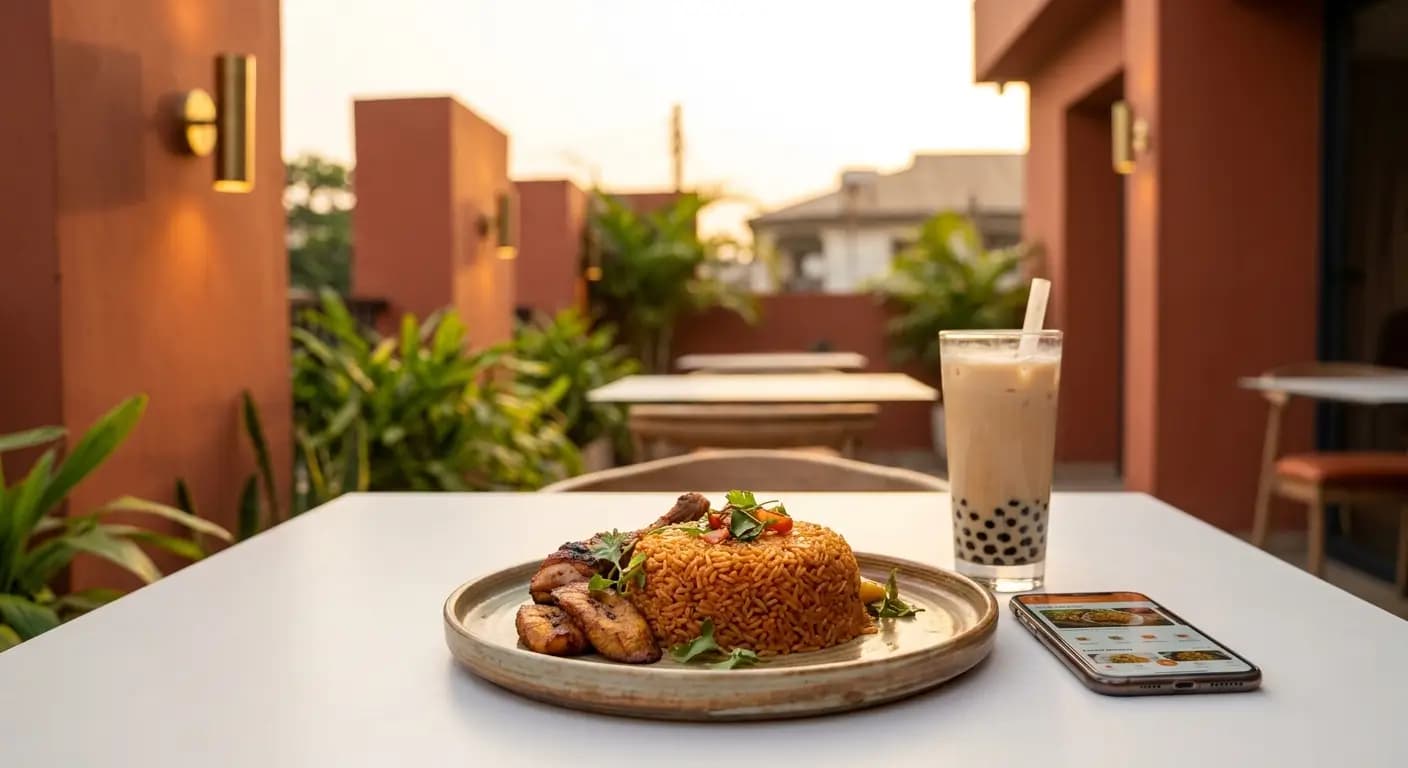
Your jollof rice now comes with a side of bubble tea, your suya guy has a QR code menu, and somewhere in Lekki an amala plate just cost more than a designer handbag. If that sentence confused you, you have officially fallen behind on what is happening in Lagos right now, because this city's food scene is moving faster than its traffic, which is saying something.
Lagos has always eaten with personality. What is different in 2026 is the sheer speed at which trends are landing, mutating, and spreading across every income bracket at once. A trend that starts in a glossy Victoria Island restaurant can show up on a roadside cart in Mushin within weeks, remixed and made more affordable but somehow still recognizable. This is the story of what Lagosians are actually eating, ordering, and obsessing over this year, and exactly where you need to go to taste it for yourself.
Street Food Just Got A Formal Invitation Into Fine Dining
For decades there was an invisible line in Lagos food culture. Street food stayed on the street, and restaurants stayed polished, formal, and slightly removed from the chaos outside their doors. That line has basically dissolved. Casual dining spots across the city are now lifting flavors and formats straight off the street and dressing them up for a sit down menu, loaded shawarma fries piled high with sauces, suya served as an elevated platter with garnish and presentation it never had on a roadside grill, and jollof rice reimagined with contemporary twists that would make a traditionalist raise an eyebrow.
This shift is most visible in restaurants reworking Nigerian classics with fine dining technique. A Victoria Island spot has built a reputation around dishes like Truffle Jollof and a seafood spin on yaji pasta, taking street level flavor profiles and giving them a plated, composed treatment usually reserved for continental cuisine. Meanwhile a long running Nigerian restaurant chain has watched its yam porridge with fish pepper soup go properly viral on Nigerian TikTok, with the Ikeja branch in particular pulling in new customers who discovered the dish purely through food content creators rather than word of mouth, which tells you everything about where culinary discovery actually happens now.
Even amala, once considered the most humble of all Lagos meals, has been pulled into this upscale wave. Some upscale restaurants now charge close to twenty thousand naira for a single plate of abula, a price point that would have sounded absurd a decade ago but now sits comfortably on menus next to imported wine lists. The line between buka food and fine dining has not just blurred, in some corners of the city it has completely disappeared.
Where Interior Design Became Part Of The Menu
Walk into almost any newly opened Lagos restaurant and you will notice something deliberate happening before you even glance at the menu. Terracotta walls, brass fixtures, plants arranged with obvious intention in every corner, lighting that has clearly been thought through rather than just installed. This is not vanity for its own sake, restaurant owners have learned that a space which does not photograph well essentially does not exist in the eyes of younger Lagos diners who decide where to eat based on what shows up on their feed before they decide based on what is actually on the plate.
This trend has quietly raised the bar for everyone, including buka owners and casual spots that previously relied purely on taste to build a following. The investment in atmosphere is now treated as seriously as the investment in ingredients, because in a city where dining out is increasingly a social performance as much as a meal, the backdrop matters almost as much as the food sitting in front of it.
Global Flavors Have Fully Moved In, Without Pushing Anyone Out
If you thought bubble tea was a passing curiosity in Lagos, that ship has sailed. Boba, matcha, Korean corn dogs, iced coffee culture, gourmet cookies stuffed with unreasonable amounts of filling, and loaded fries piled with every topping imaginable have all crossed over from novelty into normal menu fixtures across the city. What makes this particularly interesting is that none of these imports are displacing Nigerian staples, they are simply sitting next to them without any sense of contradiction.
It is now completely unremarkable to see someone order a plate of jollof rice alongside a brown sugar boba tea at the same table in the same sitting. This fluid, borderless way of eating reflects something deeper about how younger urban Lagosians experience food generally, with far less rigid loyalty to culinary categories than previous generations and far more willingness to mix global trends with local comfort food without treating it as some kind of betrayal of tradition.
Sunday Brunch Became A Social Institution
A few years ago, Sunday afternoons in Lagos belonged almost entirely to church services and extended family visits. Now they increasingly belong to brunch. Restaurants across Lekki in particular have built dedicated weekend brunch menus running through the early afternoon, often paired with live DJ sets and the occasional bottomless drinks deal, turning what used to be a simple meal into a full afternoon social event for the city's twenty five to forty five year old professional crowd.
One of the most talked about versions of this trend happens at a prominent Pan African fine dining restaurant in Victoria Island, where Sunday brunch has evolved into something closer to a cultural gathering than a regular dining reservation, mixing food discovery with people watching and the kind of unhurried conversation that weekday Lagos rarely allows for. The space itself, with outdoor garden seating and art installations woven into the architecture, has become as much a part of the appeal as whatever happens to be on the brunch menu that particular week.
Your Food Now Arrives Before You Finish Scrolling
Perhaps the most structurally significant shift happening in Lagos food culture right now is not about flavor at all, it is about logistics. Food delivery has gone from a convenient extra option to something close to a daily utility for a huge segment of the city's working population. A homegrown Lagos delivery platform has scaled aggressively over the past year, expanding into quick commerce with networks of dark stores designed to get food and groceries to customers in minutes rather than the typical half hour wait, while continuing to dominate as the default choice for corporate professionals ordering lunch from their desks.
Alongside this, an entirely new category of restaurant has emerged that most diners will never actually walk into. Cloud kitchens operating purely as digital storefronts, with no physical dining room at all, are quietly serving thousands of meals across neighborhoods like Lekki, Ikoyi, Yaba, and Victoria Island, built entirely around delivery efficiency rather than ambiance. This technology shift is also changing how traditional restaurants operate internally, with growing numbers of mainland and island spots adopting QR code ordering systems that let customers browse a digital menu and place an order without ever flagging down a waiter, something that would have felt unnecessarily futuristic in Lagos dining culture just a few years ago.
Nigerian Chinese Fusion Quietly Became A Permanent Fixture
While the spotlight tends to fall on flashier global trends, one fusion category has been embedding itself into everyday Lagos dining for years without much fanfare. Restaurants blending Chinese cooking techniques with Nigerian flavor profiles and spice levels are now widespread across the city, deeply woven into local dining culture rather than treated as a novelty international option. This particular fusion has staying power precisely because it never tried to announce itself as a trend, it simply adapted to what Lagosians already wanted to eat and quietly became part of the city's everyday culinary fabric.
Owambe Culture Is Reshaping What Restaurants Offer
Lagos does not just eat to satisfy hunger, it eats to celebrate, and the city's famous owambe party culture has started influencing restaurant menus directly. Several spots now position themselves specifically around celebratory dining, building menus and event packages designed for birthdays, anniversaries, and the kind of elaborate gatherings Lagos is internationally known for. This is less a fleeting trend and more a recognition that food in this city has always been inseparable from community celebration, and restaurants are simply formalizing an arrangement that informally existed for generations.
What This All Says About Lagos Right Now
Every single one of these trends points toward the same underlying truth about this city. Lagos refuses to choose between tradition and reinvention, it simply absorbs both at the same time and keeps moving. A plate of amala can cost the same as a designer accessory in one part of town while a street vendor two kilometers away sells the same dish for less than the price of a bus fare, and both versions remain completely legitimate expressions of the same food culture.
If you want to actually experience what is happening in Lagos food right now rather than just reading about it, the move is simple. Spend one weekend chasing the upscale reinvention of a classic dish at a restaurant that has clearly thought about its lighting as much as its menu, then spend the next ordering delivery from a cloud kitchen you will never physically see, then finish it off standing on a street corner eating suya the exact same way Lagosians have for decades. That contrast, served back to back, is the most honest summary of this city's food identity you will ever get.