
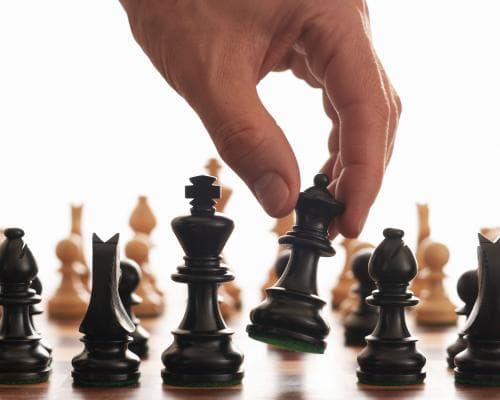
Imagine a game where strategy and logic come together in a battle of wits. Welcome to the world of chess, where the thrill of competition meets the excitement of problem-solving. In this article, we will delve into the fascinating world of chess puzzles, exploring four intriguing problems that will challenge your mind and test your skills.
The Art of Chess Puzzles
Chess puzzles have been a staple of the game for centuries, providing a unique way to improve your skills and think critically. These puzzles can range from simple tactics to complex strategies, each one designed to challenge your understanding of the game. Whether you are a seasoned player or a beginner, chess puzzles offer a fun and engaging way to improve your skills and stay entertained.
Puzzle 1: The Oddities of Chess Tournaments
Have you ever wondered what happens when several players compete in a chess tournament? With multiple players and games, it can be difficult to keep track of who has played whom and how many games each player has won. But what if we told you that there is a clever way to prove that the number of players who have played an odd number of games must be even? The solution lies in the fact that every game has two players, making the total number of games played by everyone even. When you add up odd and even numbers to make an even number, there must be an even number of odd ones, because if you have an odd number of odd numbers the total will be odd.
Puzzle 2: The Knight's Journey
A knight in chess moves in an L pattern, two squares in one direction and one square in a perpendicular direction. But can a knight visit every square on the chessboard exactly once and end up in the top left corner, starting from the bottom right corner? The answer is no. A knight move goes from a white to a black square, or vice versa. To visit every square on the board exactly once requires 63 moves. If you start on white, you will end on black, or vice versa. You cannot start on one corner and end on the opposite corner, since opposite corners of a chess board are the same color.
Puzzle 3: The Pawn's Return
In this puzzle, we are tasked with finding the fewest number of moves needed for a pawn to leave its initial place, get promoted, and then return to its original position. Assuming the two players are collaborating to achieve this, the solution involves a series of clever moves. The pawn begins on B2, and with a series of moves, it can be promoted and return to its original position in just six moves.
Puzzle 4: The Four Knights
This puzzle involves swapping the positions of two pairs of knights on a strangely-shaped grid. The knights make one move at a time, and the goal is to get the black knights to where the white knights are, and the white knights to where the black knights are. The solution involves thinking abstractly and using a simple insight to untangle the problem. By numbering the boxes and analyzing the possible moves, we can see the pattern and solve the puzzle.
The Benefits of Chess Puzzles
Chess puzzles offer a unique way to improve your skills and think critically. By solving these puzzles, you can develop your problem-solving skills, improve your memory, and enhance your analytical thinking. Whether you are a seasoned player or a beginner, chess puzzles provide a fun and engaging way to stay entertained and challenged.
Conclusion
The world of chess puzzles is a fascinating and challenging place, full of intricate problems and clever solutions. By exploring these puzzles, we can improve our skills, think critically, and have fun. Whether you are a seasoned player or a beginner, chess puzzles offer a unique way to engage with the game and stay entertained. So why not give it a try? Take on the challenge of these puzzles and see how far you can go.