
1. Media Language and Public Perception
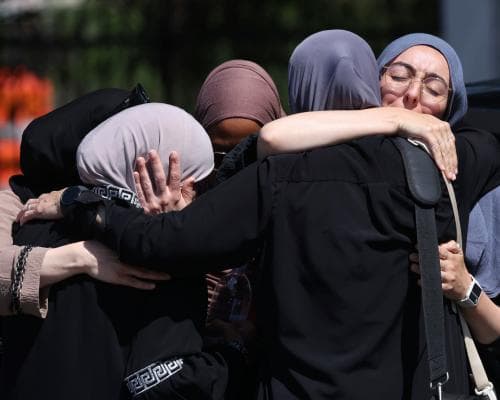
Recent coverage of the terrorist attack on the Islamic Centre in San Diego illustrates how word choice shapes public response. Some outlets described the perpetrators as “teen suspects” and referred to the victims as “three deceased” rather than acknowledging the murder of worshippers in a mosque. Such euphemistic language reduces the urgency of the event and obscures the nature of the violence. When the vocabulary of terror is applied unevenly, it creates a hierarchy of sympathy that favours certain victims while marginalising others.
2. The Rise of Anti‑Muslim Hostility
Across continents, incidents targeting Muslims have increased dramatically. Mosques are being vandalised, women wearing hijab are assaulted, online platforms are flooded with hateful rhetoric, and far‑right demonstrations openly call for the eradication of Islam. These events rarely generate sustained outrage; they appear briefly in the news cycle before fading from public attention.
3. Political Normalisation of Exclusion
In the United States, policies such as the travel restriction on several predominantly Muslim nations have embedded suspicion within immigration procedures. In the United Kingdom and Europe, parties including Reform UK, the National Rally and Alternative for Germany have built electoral support by portraying Islam as incompatible with national identity. In India, the current administration has shifted anti‑Muslim sentiment from the political fringe to the mainstream, employing inflammatory rhetoric, mob violence and discriminatory legislation. In China, the mass detention of Uyghur Muslims represents an extreme form of state‑led repression that, despite widespread condemnation, has elicited limited coordinated international action. In each case, Muslim identity is treated not as a constituency to be included but as a problem to be managed.
4. Selective Framing in the Press
Media outlets often shape perception through selective framing and omission. A recent arson attack was reported as targeting a “former synagogue,” suggesting antisemitism, while the fact that the building was being purchased by a group of young Muslims for conversion into a mosque and community centre was omitted. Such partial reporting distorts public understanding, inflames communal tensions and endangers both Jewish and Muslim communities.
5. The Legacy of Post‑9/11 Narratives
Since the attacks of 11 September, global narratives have linked Muslim identities with threat. Political leaders, media organisations and state policies have reinforced this association, transforming a temporary response into a permanent structural bias. Unlike other forms of racism, Islamophobia is rarely expressed in overtly racial terms; it is mediated through language that frames Muslims as a security concern. This framing influences governance, economic policy and international relations by conditioning trust and determining whose rights are considered conditional.
6. The Hypocrisy of the “Integration” Argument
Western politicians frequently lecture migrants about integration while expatriate communities from the United States, United Kingdom and France maintain insulated lifestyles in Africa, Asia, the Gulf states and the Caribbean. Exclusive residential compounds, imported cultural practices and inflated property prices often displace local populations, yet this phenomenon is rarely described as a failure to integrate. The standard of integration is applied asymmetrically, favouring host societies while marginalising newcomers.
7. Socio‑Economic Costs of Islamophobia
Discrimination against Muslims creates barriers to employment, capital and professional advancement, often hidden within hiring practices. Segregation in housing, education and public life fosters alienation, deepening inequality and social division. When media and technology repeatedly associate Muslims with conflict, prejudice becomes normalised and simplistic narratives of terrorism replace nuanced analysis. These narratives permeate schools, workplaces and public debate, shaping how entire communities are treated.
8. Impact on International Development
Aid to Muslim‑majority countries is frequently tied to counter‑terrorism objectives rather than long‑term development goals. This security‑focused approach distorts policy, weakens partnerships and hampers cooperation at a time when shared challenges such as climate change, migration and global health require collaborative solutions. The result is a cycle of mistrust that undermines both humanitarian outcomes and geopolitical stability.
9. Confronting Structural Islamophobia
The challenge extends beyond recognising Islamophobia as prejudice; it requires acknowledging its structural presence within governance, economics and the global order. As Malcolm X discovered during his 1964 pilgrimage to Mecca, Islam can embody a universal vision of equality that transcends racial hierarchies. James Baldwin’s observation that “nothing can be changed until it is faced” underscores the necessity of confronting these entrenched biases. Only through sustained, equitable condemnation of all forms of racism can the world move beyond a hierarchy of empathy that permits selective injustice.
By addressing the language of media reporting, the political normalisation of exclusion, and the systemic consequences for societies worldwide, we can begin to dismantle the most permissible yet consequential form of contemporary prejudice.