
A Storm of Headlines That Demands Your Attention
Britain stands at a pivotal moment. From the corridors of the Ministry of Defence to the streets of Aberdeen, from polling rooms that hint at a new Labour leader to courtroom battles over asylum rights, the nation’s political landscape is shifting faster than a drone over a battlefield. In the next few minutes you will discover why the country’s security budget, the future of the Labour Party, and the fate of refugees are all intertwined in a story that could reshape Britain for years to come.
1. Defence Funding on the Edge of Collapse
1.1 The Chief of Defence Staff Issues a Warning
Rich Knighton, the chief of the defence staff, told senior officers that Britain will have to scale back military operations and exercises unless the Ministry of Defence receives additional money from Downing Street and the Treasury. He warned that the current budget trajectory leaves the armed forces unable to meet emerging threats, especially as NATO members push for higher spending targets.
1.2 Resignations Signal Deep Discontent
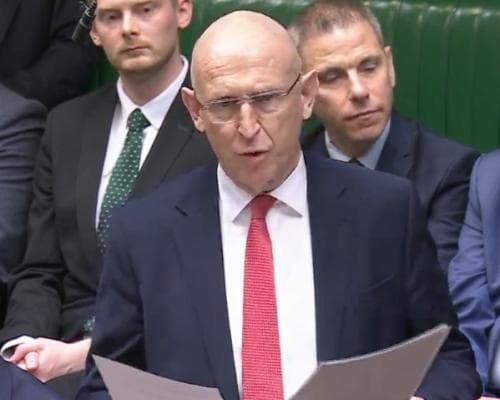
Two senior ministers walked away from their posts last week. John Healey, the former defence secretary, delivered a scathing speech in the Commons, declaring the defence investment plan “well short of what is required.” He blamed Treasury reluctance and pointed out that adversaries do not wait for parliamentary timetables. Al Carns, another former defence minister, followed with his own resignation, arguing that the plan focuses on the wrong priorities and spends too much time preparing for yesterday’s wars instead of tomorrow’s.
1.3 What the Defence Investment Plan Misses
Carns highlighted the rapid evolution of modern warfare. He cited the Ukrainian conflict where a fleet of inexpensive drones caused the majority of casualties, demonstrating that low‑cost, high‑volume technology can outmatch traditional heavy armour. He urged a balanced mix of sophisticated systems and affordable mass‑produced weapons, warning that the current plan fails to strike that balance.
1.4 A Call for a Broader View of National Security
Healey expanded the debate beyond the armed forces. He argued that every government department—from energy to transport—must embed security into its core mission. He painted a picture of a Britain where resilience is felt in every community, creating jobs and hope while protecting the nation from external threats.
2. The Political Fallout: Leadership, Byelections, and Policy Battles
2.1 Andy Burnham as a Potential Game Changer
Recent polling from Ipsos and Deltapoll suggests that if Andy Burnham were to replace Keir Starmer as Labour leader, the party could gain a four‑point advantage over Reform UK. The Deltapoll survey showed Labour at 20 % nationally but rising to 26 % when respondents imagined Burnham at the helm. While the pollsters caution that hypothetical scenarios are difficult to predict, the numbers hint at a possible “Burnham bounce” that could reshape the upcoming election landscape.
2.2 The Aberdeen South Byelection: Oil, Gas, and a Message to Westminster
Kemi Badenoch framed the Aberdeen South contest as a litmus test for the government’s stance on North Sea drilling. She argued that a Conservative victory would send a clear signal to both Downing Street and the Scottish National Party that the war on oil and gas must end. The candidate, Douglas Lumsden, is a lifelong Aberdonian with deep ties to the oil sector, positioning the race as a battle over thousands of jobs rather than a single personality clash.
2.3 Reform UK Under Scrutiny
Sam Freedman’s analysis of voter sentiment revealed that attacks on Reform UK’s leader Nigel Farage based on immigration have little impact. Instead, messages that exposed Farage’s financial ties to a crypto billionaire and highlighted the party’s plans to erode workers’ rights proved far more effective. The most powerful line linked Reform’s proposal to reintroduce fox hunting with a broader narrative that the party only cares about the rich, resulting in a notable drop in support.
2.4 Refugee Rights and the Threat to Judicial Oversight
Human rights groups and legal experts condemned the Conservative government’s proposal to strip judges of the authority to rule on asylum appeals. They described the move as an assault on justice and equality under the law. The plan would effectively hand deportation decisions over to ministers, raising concerns about the erosion of legal safeguards for vulnerable migrants.
2.5 The Dartmoor Pony Controversy
A media story about the possible culling of semi‑wild ponies on Dartmoor sparked a swift reaction from the government, which denied any intention to order a cull. Nevertheless, the Conservative Party launched a petition urging Labour to intervene and protect the iconic animals. The episode illustrates how even seemingly minor environmental issues can become flashpoints in the broader political debate.
3. The Human Face of Policy: Voices from the Frontline
3.1 Angela Rayner Defends Youth Wage Increases
Former deputy prime minister Angela Rayner dismissed the claim that higher wages for young workers are driving youth unemployment. She emphasized that structural factors, not pay levels, are responsible for the persistent “NEET” problem. Rayner argued that better‑quality jobs with stronger worker representation are the true solution to building a high‑productivity economy.
3.2 Keir Starmer’s Resolve at the G7 Summit
At the G7 summit, Starmer reiterated his determination to stay the course despite criticism. He recounted how skeptics repeatedly told him that turning Labour around, winning an election, and investing in public services were impossible tasks. He responded that each prediction proved wrong, reinforcing his commitment to lead the country toward the change voters demand.
3.3 The Labour Leadership Debate Continues
Speculation about the composition of a potential Andy Burnham cabinet has already begun. Analysts suggest that Ed Miliband could be considered for a senior role, possibly as foreign secretary, while his younger brother David might be eyed for the same position. The discussion reflects the party’s search for experienced figures who can navigate a post‑Brexit Europe and restore Britain’s standing on the world stage.
4. What These Developments Mean for Britain’s Future
Security Funding Gap – Without a clear path to raise defence spending to NATO’s 3 % target, the UK risks losing its strategic influence and may be forced to curtail overseas deployments.
Leadership Uncertainty – Polls indicate that a change at the top of the Labour Party could shift the electoral balance, but the volatility of voter sentiment means any boost may be short‑lived.
Energy Policy at a Crossroads – The Aberdeen South contest underscores the tension between climate goals and the economic realities of the oil and gas sector, a debate that will shape Britain’s energy transition.
Rights and the Rule of Law – Proposals to limit judicial oversight of asylum cases raise fundamental questions about Britain’s commitment to human rights and the independence of the judiciary.
Social Cohesion – Debates over youth wages, workers’ rights, and animal welfare reveal a society grappling with how to balance economic growth, fairness, and cultural heritage.
5. Key Takeaways
The Ministry of Defence faces a funding crisis that could force a rollback of critical operations.
High‑profile resignations highlight internal disagreements over the direction of Britain’s defence strategy.
Polling suggests a potential leadership shift within Labour could narrow the gap with Reform UK, but the impact remains uncertain.
The upcoming Aberdeen South byelection may serve as a referendum on the future of North Sea oil and gas.
Proposals to remove judicial review of asylum decisions have ignited a fierce debate over justice and equality.
Public sentiment is more responsive to messages about financial integrity and workers’ rights than to traditional immigration arguments.