
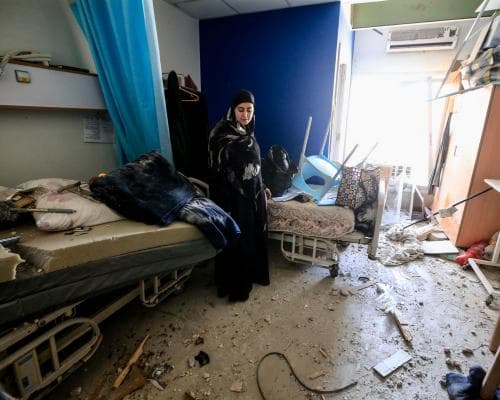
A Cry for Attention in a World That Looks Away
Bombs fell on Lebanon this week, families in Gaza scramble for clean water, and ordinary Iranians watch their economy crumble. While headlines trumpet a possible US‑Iran agreement, the people who live under the shadow of war are forced to keep a suitcase ready at a moment’s notice.
1. The Promise of a US‑Iran Deal That Feels Like a Mirage
President Trump has repeatedly said that a peace pact with Iran is “very close.” If a deal were signed, the strategic Strait of Hormuz – the route for roughly one‑fifth of the world’s oil and gas – could reopen. Yet on the ground the sound of artillery drowns any optimism. Israeli forces launched their deepest incursion into Lebanon in more than two decades, killing civilians and displacing hundreds of thousands.
Why the Gap Between Diplomacy and Reality Persists
Israeli Defence Minister Israel Katz announced that ground operations will continue even after a US‑backed ceasefire was declared.
Hezbollah rejected the ceasefire, demanding a full Israeli withdrawal.
Far‑right factions in Israel’s coalition are calling for annexation of southern Lebanon, Gaza and the West Bank, turning a limited pause into a potential expansion of the conflict.
2. Israel’s Strategic Calculus – Election Year or War Goal?
Emma Graham‑Harrison, the Guardian’s chief Middle East correspondent, explains that the war’s early successes seemed to bolster US and Israeli confidence. The blockage of the Hormuz Strait, however, stalled any clear victory.
Israeli voters are being asked to judge Prime Minister Netanyahu on security gains since the October 7 attacks.
Thousands of Israelis have been injured and dozens killed by missile strikes from Iran and Lebanon.
Analysts say the original aim of regime change in Tehran has faded, leaving nuclear proliferation as the only lingering metric of success.
With Israeli elections looming, many see the renewed push into Lebanon and Gaza as a political strategy designed to rally hard‑line supporters.
3. Gaza – A Humanitarian Catastrophe Ignored by the World
A US‑brokered “ceasefire” took effect last October, yet more than nine hundred people have died in Gaza since then. The United Nations describes the situation as genocide.
Over ten percent of the pre‑war population has been killed or injured.
The strip is now a wasteland where clean water, medical supplies and food are scarce.
Israel controls at least sixty percent of Gaza, pushing the “yellow line” further inland to claim more territory.
Western governments, preoccupied with rising oil prices and inflation, offer condemnation but few concrete actions. The European Union, Israel’s largest trading partner, has yet to wield its economic leverage.
4. Life in Iran and Lebanon – Living on the Edge of Collapse
In Tehran, anti‑government protesters who survived the January crackdown now live under the threat of air raids with no shelters. Business owners like Amir from Mashhad feel humiliated as the war deepens Iran’s economic crisis and strengthens an oppressive regime.
Lebanese citizens face daily bombings, the demolition of villages and the lingering trauma of past civil wars. The lack of confidence in Hezbollah and the constant threat of Israeli strikes make planning even a simple summer visit impossible.
Women, minorities and the poorest bear the brunt of economic hardship, while the psychological weight of uncertainty erodes community resilience.
5. Will Upcoming Elections Shift the Tide?
Both the United States and Israel head toward pivotal elections. Yet the opposition in Israel offers little policy divergence from Netanyahu, and it remains unclear how US voters will react to Trump’s foreign‑policy record.
What is certain is that ordinary people across Lebanon, Iran and Gaza continue to ask why Western democracies allow violations of international law to go unchecked, especially when the same nations condemn Russia’s actions in Ukraine.
6. A Call for Global Responsibility
The conflict is not a distant news story; it is a daily reality for millions who keep a bag packed, ready to flee at any moment. The world must move beyond rhetoric and take decisive steps to protect civilians, enforce humanitarian law and support genuine diplomatic pathways.