
A Moment That Grabs the World’s Attention
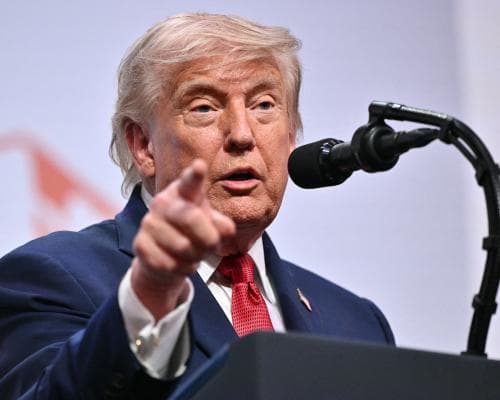
The lights in the Hall of Versailles flickered as a former U.S. president stepped onto the historic stage. The atmosphere was electric, the cameras were rolling, and every headline was waiting for the next line. What followed was a whirlwind of statements that swung from hopeful peace talks in Kyiv to bold claims about a looming Iran agreement. In the space of a single afternoon the former president managed to touch on energy, migration, artificial intelligence, and the future of Europe‑U.S. ties. Below is a comprehensive, easy‑to‑read recap of the most striking moments, the reactions of European leaders, and what the whole episode could mean for global diplomacy.
1. Trump’s Closing Remarks on the G7
At 6.20 pm British Summer Time the former president wrapped up his press briefing with a simple line: “… and on that note, it’s a wrap for today!” He then announced his flight to Paris for a formal dinner at the Palace of Versailles. French reaction was mixed; some observers warned that the dinner could spark controversy in a country still divided over the presence of a U.S. leader known for his polarising style.
2. The “Something Will Happen” Promise
During the same session Trump said he hoped “something will happen” in the peace talks between Russia and Ukraine. He praised what he called “productive” conversations with Ukrainian President Volodymyr Zelenskyy in France and a phone call with Russian President Vladimir Putin. The comment came after two days of intense G7 negotiations, where French President Emmanuel Macron, German politician Friedrich Merz and Italian Prime Minister Giorgia Meloni all voiced support for a stronger U.S. alignment with Europe on Kyiv’s cause.
3. NATO’s View on Possible Russian Dialogue
Earlier in the day NATO Secretary General Mark Rutte noted that the idea of opening talks with Russia was “clearly debated among allies.” While he stopped short of confirming any concrete steps, his words underscored a growing willingness within the alliance to explore diplomatic channels, even as the war in Ukraine continued to dominate the agenda.
4. A Dinner at Versailles and the French Sentiment
Trump’s upcoming dinner at the Palace of Versailles sparked a wave of commentary across French media. Some left‑wing voices described the event as “naïve,” arguing that hosting a figure who has repeatedly challenged European unity could send the wrong signal. Others pointed out that the dinner might serve as a diplomatic bridge, offering a rare face‑to‑face moment between Washington and Paris.
5. Random Remarks on Iran and JD Vance
At 6.12 pm Trump made an off‑the‑cuff comment linking the potential Iran deal to U.S. Senator JD Vance. He said, “If it works out, I’m going to take the credit; if it doesn’t work out, I’m blaming JD.” The remark, delivered with a grin, highlighted the former president’s habit of turning serious policy discussions into personal anecdotes.
6. Brazil, Brazil, Brazil
A few minutes later Trump turned his attention to Brazil, describing the country’s political climate as “a little rough” and “a little dangerous.” The comment was a response to a recent story about former Brazilian President Jair Bolsonaro’s son receiving a prison sentence for seeking U.S. interference in a coup trial. Trump’s brief assessment underscored his continued interest in Latin American affairs.
7. Energy Prices, Iran, and Praise for Russia and China
When asked about falling energy prices, Trump steered the conversation back to the Iran agreement, insisting that the deal would keep global markets stable. He also thanked Russian President Vladimir Putin and Chinese President Xi Jinping for remaining neutral on the Iranian issue, warning that a different stance could have made negotiations far more difficult.
8. Europe’s “Hard Times” – Energy and Migration
At 5.43 pm Trump expressed hope that Europe would “find its way” amid what he described as “hard times” on energy and immigration. He then shifted to a question‑and‑answer segment, where he praised his bilateral talks with Macron, calling the meeting “very good.” Notably, he omitted any mention of other European leaders, even though he had recently highlighted partnerships with Qatar, Egypt, India and the United Arab Emirates.
9. Artificial Intelligence – A Double‑Edged Sword
During the same Q&A, Trump warned that artificial intelligence could become “the biggest thing ever” but also cautioned that it could be “both great and could be bad.” He urged careful handling, a sentiment echoed by many world leaders who see AI as a transformative yet risky technology.
10. Unity on Migration and Drug Trafficking
Trump highlighted a “great deal of unity” among G7 members on tackling irregular migration and drug trafficking, describing the joint statement on the latter as “beautiful.” The emphasis on shared security concerns reflected a broader attempt by the summit to showcase cooperation beyond the Ukraine war.
11. The Ukraine‑Russia Phone Call Narrative
Returning to the Ukraine conflict, Trump claimed he had “very good conversations” with both Zelenskyy and Putin. He suggested that both leaders wanted to act but lacked a clear roadmap, adding that Russia, as the “offensive” side, was losing more soldiers than Ukraine. The former president’s narrative painted the conflict as a stalemate waiting for a diplomatic spark.
12. Lebanon, the Middle East, and a Larger Peace Vision
Trump briefly mentioned Lebanon, calling the peace process there “a very small piece of the puzzle” but one that “makes a lot of noise.” He expressed hope that the Iran agreement could serve as a stepping stone toward a broader Middle East settlement, a theme that resurfaced throughout the day.
13. Gulf Nations and the Strait of Hormuz
Trump announced plans to work with Gulf states on “non‑nuclear issues,” while claiming that maritime traffic through the Strait of Hormuz had already risen substantially thanks to his deal. He warned that if Iran failed to honor the agreement, the United States might “go back to bombing them,” a stark reminder of the high stakes involved.
14. The Iran Deal Timeline
Repeatedly, Trump insisted that the Iran agreement would be signed “shortly,” hinting at a possible signing the next day or by Friday. He framed the deal as a historic achievement that prevented a potential economic catastrophe and praised the removal of Iranian General Qassem Suleimani as a prerequisite for the agreement.
15. Frustrations with Israel’s Netanyahu
During a discussion about the Middle East, Trump showed a hint of irritation toward Israeli Prime Minister Benjamin Netanyahu, noting that the two “get a little excited sometimes” and that they “have a little dispute over Lebanon.” He advised Netanyahu not to “knock down a building every time somebody walks into it that’s from Hezbollah,” a comment that blended diplomatic language with personal opinion.
16. Macron’s Perspective on Europe‑U.S. Alignment
French President Emmanuel Macron described the G7 outcome on Ukraine as a “profound shift in approach,” emphasizing a new willingness from the United States to cooperate closely with Europe. He praised the joint wording on Ukraine, calling it a “very profound shift” that signaled a clear willingness to back Kyiv. Macron also criticized Russia for showing no genuine intent to join peace talks.
17. Digital Policy and AI Regulation
In a separate segment, Macron turned his attention to digital policy, stressing the need to protect children online and to regulate artificial intelligence responsibly. He warned that powerful AI models must not fall into the hands of authoritarian regimes, echoing concerns voiced by many Western leaders about the technology’s potential misuse.
18. Italy’s Call for a Single EU Negotiator
Italian Prime Minister Giorgia Meloni proposed that the European Union appoint a single negotiator for Ukraine, preferably from a medium‑sized country. She argued that a unified voice could streamline discussions and improve the EU’s bargaining power in future talks.
19. Latvia’s Push for Stronger Anti‑Drone Defences
Latvian Prime Minister Andris Kulbergs warned that drones “do not have borders,” urging Europe to develop robust anti‑drone measures. He called for close cooperation among Baltic states, Poland, Finland and other NATO members, highlighting recent drone incursions as a growing security challenge.
20. Denmark’s Commitment to Baltic Defence
Denmark announced plans to send an 850‑person battalion to Latvia in the autumn, replacing a Swedish contingent. The move was framed as part of a broader effort to deter Russian aggression and to demonstrate European responsibility for its own security, a point repeatedly emphasized by NATO officials.
21. The G7’s Stance on AI – A Meeting with OpenAI and Anthropic
An afternoon session at the summit focused entirely on artificial intelligence, featuring CEOs from OpenAI and Anthropic. Leaders discussed the rapid evolution of AI, its economic potential, and the need for international standards to prevent misuse. The discussion underscored how AI has become a central pillar of modern geopolitics.
22. The “Not for Sale” Protests in Albania
While the G7 deliberated in France, protests erupted in Albania against a luxury resort linked to Jared Kushner, son‑in‑law of Donald Trump. Demonstrators demanded that the government protect a turtle nesting site and preserve the region’s natural heritage. The protests highlighted how U.S. political connections can reverberate far beyond American borders.
23. Closing Thoughts – What Does This All Mean?
The G7 summit in France ended with a mixture of optimism and lingering tension. Trump’s statements painted a picture of a leader eager to claim diplomatic victories, from the Iran deal to personal talks with world heads of state. European leaders, meanwhile, stressed unity on Ukraine, called for stronger defence spending, and warned about the risks of AI and drone warfare. The dinner at Versailles may become a symbolic moment of renewed transatlantic dialogue, or it could simply be another page in a long history of high‑profile diplomatic theater.
For observers, the key takeaway is that the world is watching how the United States, under Trump’s influence, will navigate a complex web of conflicts, trade deals and emerging technologies. Europe’s response balancing cooperation with caution will shape the next chapter of global politics.