
A Flight Gone Wrong Sparks a Global Conversation
The moment the Uruguay squad stepped onto the tarmac in Cancún, the excitement of a World Cup debut was already tinged with anxiety. A paperwork snag turned a routine charter into a nightmare of cancellations and late arrivals. By the time the players reached the press conference at Miami Stadium, the clock had already ticked far beyond the scheduled start of their first match against Saudi Arabia. The drama of a delayed flight quickly became a headline that exposed deeper logistical cracks in FIFA’s historic decision to spread the tournament across three nations.
1. The Day the Plane Didn’t Take Off
Uruguay’s itinerary called for an early Sunday afternoon departure from Cancún to Fort Lauderdale. The first aircraft was grounded because the required flight documents were not ready at the scheduled take‑off time. Officials scrambled, a second plane was arranged, and yet that flight also fell victim to the same paperwork problem. The team finally left Mexican airspace hours later, arriving in South Florida just in time to face a press conference that felt more like a late‑night interview.
Captain José María Giménez summed up the mood in a single word: “difficult.” While head coach Marcelo Bielsa chose to downplay the setback, the players admitted that the delay forced them to rest in the hotel rather than follow their usual pre‑match routine. An official statement from the Uruguayan Football Association (AUF) blamed “problems beyond the control of the AUF” and pointed to FIFA’s revised departure time of 4.15 pm as the cause.
2. Bielsa’s Uncharacteristic Silence
Marcelo Bielsa, a coach known for his fiery press conferences, offered a rare moment of calm. “The flight caused no problems,” he said, refusing to let the logistical hiccup distract his side. The Uruguay captain, however, was more candid. “We had some complications,” he explained, “but we used the hotel time to rest and we arrived later than planned.” The contrast between Bielsa’s composed remarks and Giménez’s honesty highlighted the tension between a manager’s need to protect his squad and the reality of a disrupted preparation.
3. A History of Flight Frustrations
The AUF’s frustration was not a new feeling. A social‑media post resurfaced a message from former striker Diego Forlán, who in 2010 lamented a charter delay just before Uruguay’s first World Cup game in South Africa. Forlán’s question, “Who is to blame???” echoed through the modern incident, reminding fans that travel woes have long haunted the national team.
4. The Bigger Picture: FIFA’s Three‑Country Model
Uruguay’s travel chaos is a symptom of a larger logistical puzzle. FIFA’s choice to host the 2026 tournament across the United States, Canada and Mexico is the first of its kind. While the plan promises broader fan engagement, it also creates a maze of visa requirements, border crossings and coordination challenges.
Iran’s coaching staff struggled to secure U.S. visas after training in Mexico.
Ghana’s midfielder Thomas Partey was denied a Canadian visa following legal issues in the United Kingdom, ruling him out of the opening match in Toronto.
These examples illustrate how the multi‑nation format can strain even well‑funded football federations, turning routine travel into a diplomatic exercise.
5. Uruguay’s Preparation Journey
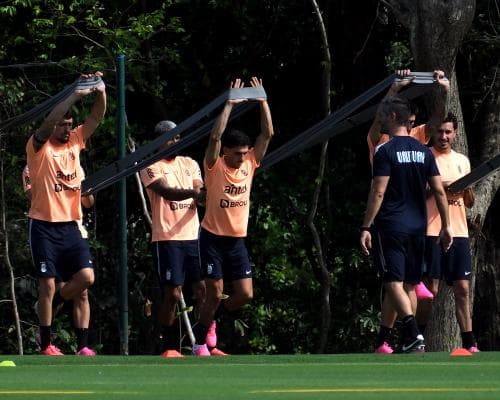
Before the Mexican detour, Uruguay spent two weeks at a training camp in Montevideo, followed by a week in Playa del Carmen, a coastal resort that served as their base for the final stretch. The team’s schedule was meticulously planned: morning sessions on the beach, tactical drills in the afternoon, and recovery in the evenings. The unexpected flight delay forced a sudden shift from on‑field work to hotel rest, a change that could have disrupted rhythm but also offered a chance for mental recovery.
6. Marcelo Bielsa: A Coach Tested by Time
At 70, Bielza brings a résumé that includes leading Argentina in 2002 and Chile in 2010. His three‑year spell with Uruguay has been anything but smooth. A humiliating 5‑1 loss to the United States in a friendly sparked calls for his resignation, yet he remained at the helm. Two draws against England and Algeria in March steadied the ship, but Bielsa chose not to schedule any pre‑tournament friendlies, a decision that left the squad without recent competitive match practice.
The coach’s philosophy emphasizes possession, forward movement and relentless attack. He praised Real Madrid captain Federico Valverde as the team’s engine, noting the midfielder’s resourcefulness and influence on Uruguay’s style of play. Valverde’s club season was turbulent, but Bielsa believes his international performances will be decisive.
7. Saudi Arabia’s Parallel Story
Across the Atlantic, Saudi Arabia also faced a rocky road to the opening match. New manager George Donis, a former Greek international, took charge just weeks before the tournament after the abrupt dismissal of Hervé Renard. Donis, who spent four years coaching in England and several seasons in the Saudi Pro League, knows the players intimately. His immediate goal is to avoid embarrassment in a group that also contains Spain and Cape Verde.
Donis highlighted the limited preparation time: “I have trained the team for twelve sessions in total. The days were not enough, everything happened very fast.” He also invoked the memory of Saudi Arabia’s 1994 World Cup run, when victories over Belgium and Morocco propelled the team to the round of sixteen for the first time. “The win over Argentina showed that the current generation can draw inspiration from the past,” Donis said, urging his squad to emulate that historic achievement.
8. Fan Support in the United States
Despite the travel setbacks, Uruguay will enjoy the backing of roughly ten thousand supporters who have gathered in Miami. The diaspora community has turned the city into a vibrant showcase of Uruguayan colors, chanting “Arriba Uruguay!!” and creating a home‑like atmosphere for the team. This fan presence could prove vital as the squad seeks to translate its tactical preparation into on‑field success.
9. What the Delays Mean for the Tournament
The Uruguay episode underscores a critical lesson for FIFA: logistical planning must match the ambition of a three‑nation World Cup. Flight schedules, visa processes, and airport coordination need robust contingency plans. Teams cannot afford to lose precious preparation time, especially when the margin between victory and defeat can be measured in minutes.
For fans, the drama adds an unexpected narrative layer to the opening matches. The story of a charter flight turned into a saga of patience, resilience and strategic adaptation. It reminds us that football is not only about the ninety minutes on the pitch but also about the countless behind‑the‑scenes efforts that bring the sport to the world stage.
10. Looking Ahead
As Uruguay prepares to face Saudi Arabia, both teams carry the weight of recent challenges. Uruguay leans on the steady hand of a veteran coach and the creative spark of Valverde. Saudi Arabia relies on a manager who knows his players and draws motivation from historic triumphs. The match will be a test of how well each side can convert adversity into performance.
Regardless of the result, the opening game will set the tone for a tournament defined by geographic diversity, logistical complexity and the unyielding passion of fans worldwide. The world will watch not only the goals and saves but also how teams navigate the intricate web of travel, paperwork and preparation that underpins the beautiful game.